Brightstar Resources (BTR:AU) has announced Mining Approvals Received for Lady Shenton Mine in Menzies
Download the PDF here.
This post appeared first on investingnews.com

Brightstar Resources (BTR:AU) has announced Mining Approvals Received for Lady Shenton Mine in Menzies
Download the PDF here.

The silver price has reached unprecedented levels as rising demand collides with a persistent supply deficit.
Nations around the world are taking note, with China increasing its restrictions on silver exports in an effort to secure domestic supply for key industries. The country launched an expansion of its silver export controls on January 1, 2026, and silver surged to what was then an all-time high of US$83.90 per ounce in the lead-up to the new policy.
With strong fundamentals for the metal already in place for the year ahead, could tighter export restrictions out of China make an even stronger case for triple-digit silver in 2026?
“Prior to the introduction of the new export requirements, supply of physical silver was already tight,” said Checkan in a January 6 email. ‘Last year was the fifth straight year of deficit production, bringing the physical silver deficit to just under a quarter of a billion ounces … 230 million to be exact.”
Silver’s entrenched supply-side challenges are the product of several factors, he explained.
One is increasing demand for silver in the energy sector, whether from artificial intelligence data centers or cleantech applications, such as solar panels and electric vehicles.
That reality has merged with declining mine supply — it takes around a decade to bring a new silver discovery through to production, making it difficult to meet rising demand.
“Couple that with the fact that export restrictions (80 ton minimum of production, increased capital requirements, etc.) will take a significant portion of Chinese silver producers out of the mix for potential silver exports, and you get an immediate and significant supply stressor,” added Checkan.
Under China’s silver export restrictions, only 44 companies are licensed to send their silver to the global market.
China’s silver export restrictions are considered part of a broader trend of governments around the world tightening control over natural resources considered critical to industry and national security.
“The energy transition, the expansion of the solar industry, the development of electric vehicles and advances in high-precision electronics have steadily increased domestic demand for the metal.”
By placing silver under a strict state-controlled licensing system with designating approved exporters, the Chinese government is treating the metal in much the same vein as rare earths. Controlling supply of both commodities not only addresses its national economic goals, but also helps to control global markets as well.
The US also elevated silver to strategic metal status in November with its inclusion on its US Geological Survey’s critical minerals list due to its important role in building out advanced energy and defense technologies.
Silver’s inclusion on the list makes it a potential subject for a future Section 232 investigation — a formal process conducted by the Department of Commerce to determine if imports of certain products or materials are harming national security. The result of such proceedings could result in tariffs on silver.
It’s too early to determine the full impact of China’s new silver export restrictions, but there is potential for much tighter global supply, which could translate to increased price volatility for the white metal.
“The new regulatory framework limits exports exclusively to a small group of companies previously authorized by Chinese authorities. In practice, this scheme directly reduces the volume of silver available to international markets, as not all refining companies can obtain export permits,” wrote Di Giacomo.
“The importance of this measure is amplified by China’s dominant role in silver refining and processing, which gives it structural influence over global supply,’ he added.
That’s because China holds a very prominent position in the global silver market. The Asian nation is the world’s second largest silver producer, producing 3,300 metric tons of the metal in 2024.
It also hosts the third largest silver reserves at 70,000 metric tons.
China’s largest primary silver-producing operation is Silvercorp Metals’ (TSX:SVM,NYSEAMERICAN:SVM) Ying mine in Henan province, which yielded approximately 6.43 million ounces of silver in the company’s 2025 fiscal year. The asset has a mine life that is expected to last through 2037.
Although China follows Mexico in global silver production, it leads the world in globally traded refined silver, accounting for roughly 70 percent of the market. Silver exports out of China in 2024 reached a whopping US$3.8 billion.
China’s export curbs are sparking concerns about supply chain disruptions and higher costs for solar panels, electric vehicles and electronics makers worldwide. Commodities analyst Anton Kharitonov sees the potential for the silver price to rise as much as 30 percent over the next 12 months “if China applies these export rules strictly.’
“Looking ahead to the coming quarters, the silver market may operate under conditions of greater structural rigidity. If industrial demand maintains its growth pace and restrictions remain in place, any additional disruption to global supply could amplify price movements,” said XS.com’s Di Giacomo.
China’s silver export restrictions also have the potential to further widen the growing disconnect between silver prices in the physical and paper markets. Premiums are especially high in Asia and the Middle East.
For example, analyst Stjepan Kalinic wrote on January 5 that the heaviest‑traded Comex March 2026 contract closed on January 2 at US$72.265, while in Dubai the lowest price for a 1 ounce silver coin was US$99.93.
Securities Disclosure: I, Melissa Pistilli, currently hold no direct investment interest in any company mentioned in this article.

Andy Schectman, president of Miles Franklin, breaks down recent silver market dynamics, including the massive rise in entities standing for delivery of physical metal, increased CME Group (NASDAQ:CME) margin requirements and China’s silver export controls.
‘We’re beginning to see at the highest level a change of mentality, a change of perception of what these metals truly are,’ he said in the interview.
Securities Disclosure: I, Charlotte McLeod, hold no direct investment interest in any company mentioned in this article.
Sankamap Metals Inc. (CSE: SCU) (‘Sankamap’ or the ‘Company’) the Company and its auditor continue to work diligently toward the completion and filing of the Company’s annual audited financial statements and management’s discussion and analysis for the fiscal year ended June 30, 2025 (the ‘Required Filings’). The Company has obtained approval from the Alberta Securities Commission to extend the Management Cease Trade Order (‘MCTO’) under National Policy 12-203 Management Cease Trade Orders (‘NP 12-203’) until January 31, 2026. Sankamap confirms that it has received the crucial confirmations from the Solomon Islands government, and that the majority of the audit work has now been completed, with only a limited number of minor confirmations and outstanding items remaining. The Company is actively working to provide the remaining items and is contacting any parties from whom confirmations are still outstanding. Subject to the completion of these remaining items, the audit file is expected to enter the final stages of review and be nearing completion.
The Required Filings were due to be filed by October 28, 2025. In connection with the anticipated delays in making the Required Filings, the Company made an application for a MCTO under NP 12-203 to the Alberta Securities Commission, as principal regulator for the Company, and the MCTO was issued on October 29, 2025. The MCTO restricts all trading by the Company’s CEO and CFO in securities of the Company, whether direct or indirect. The MCTO does not affect the ability of persons who are not directors, officers or insiders of the Company to trade their securities. The MCTO will remain in effect until the Required Filings are filed or until it is revoked or varied.
The Company expects to proceed with the filing of its interim first-quarter financial statements shortly after the Required Filings have been completed and submitted.
The Company confirms that it intends to satisfy the provisions of the alternative information guidelines described in NP 12-203 by issuing bi-weekly default status reports in the form of a news release until it meets the Required Filings requirement. The Company has not taken any steps towards any insolvency proceeding and the Company has no material information relating to its affairs that has not been generally disclosed.
For further information with respect to the MCTO, please refer to the Company’s news releases dated October 21, 2025, November 4, 2025, November 18, 2025, December 3, 2025, December 17, 2025 and December 30, 2025, available for viewing on the Company’s SEDAR+ profile at www.sedarplus.ca.
About Sankamap Metals Inc.
Sankamap Metals Inc. (CSE: SCU) is a Canadian mineral exploration company dedicated to the discovery and development of high-grade copper and gold deposits through its flagship Oceania Project, located in the South Pacific. The Company’s fully permitted assets are strategically positioned in the Solomon Islands, along a prolific geological trend that hosts major copper-gold deposits; including Newcrest’s Lihir Mine, with a resource of 71.9 million ounces of gold¹ (310 Mt containing 23 Moz Au at 2.3 g/t P+P, 520 Mt containing 39 Moz Au at 2.3 g/t indicated, 81 Mt containing 5 Moz Au at 1.9 g/t measured, 61 Mt containing 4.9 Moz Au at 2.3 g/t Inferred).
Exploration is actively advancing at both the Kuma and Fauro properties, part of Sankamap’s Oceania Project in the Solomon Islands. Historical work has already highlighted the mineral potential of both sites, which lie along a highly prospective copper and gold-bearing trend, suggesting the possibility of further, yet-to-be-discovered deposits.
At Kuma, the property is believed to host an underexplored and largely untested porphyry copper-gold (Cu-Au) system. Historical rock chip sampling has returned consistently elevated gold values above 0.5 g/t Au, including a standout sample assaying 11.7% Cu and 13.5 g/t Au2; underscoring the area’s significant potential.
At Fauro, particularly at the Meriguna Target, historical trenching has returned highly encouraging results, including 8.0 meters at 27.95 g/t Au and 14.0 meters at 8.94 g/t Au3. Complementing these results are exceptional grab sample assays, including historical values of up to 173 g/t Au3, along with recent sampling by Sankamap at the Kiovakase Target, which returned numerous high-grade copper values, reaching up to 4.09% Cu. In addition, limited historical shallow drilling intersected 35.0 meters at 2.08 g/t Au3, further underscoring the property’s strong mineral potential and the merit for continued exploration. With a commitment to systematic exploration and a team of experienced professionals, Sankamap aims to unlock the untapped potential of underexplored regions and create substantial value for its shareholders. For more information, please refer to SEDAR+ (www.sedarplus.ca), under Sankamap’s profile.
1.Newcrest Technical Report, 2020 (Lihir: 310 Mt containing 23 Moz Au at 2.3 g/t P+P, 520 Mt containing 39 Moz Au at 2.3 g/t indicated, 81 Mt containing 5 Moz Au at 1.9 g/t measured, 61 Mt containing 4.9 Moz Au at 2.3 g/t Inferred)
2. Historical grab, soil and BLEG samples from SolGold Kuma Review June 2015, and SolGold plc Annual Report 2013/2012
3. September 2010-June 2012 press releases from Solomon Gold Ltd. and SolGold Fauro Island Summary Technical Info 2012
QP Disclosure
The technical content for the Oceania Project in this news release has been reviewed and approved by John Florek, M.Sc., P.Geol., a Qualified Person in accordance with CIM guidelines. Mr. John Florek is in good standing with the Professional Geoscientists of Ontario (Member ID:1228) and a director and officer of the Company.
ON BEHALF OF THE BOARD OF DIRECTORS
s/ ‘John Florek’
John Florek, M.Sc., P.Geol
Chief Executive Officer
Sankamap Metals Inc.
Contact:
John Florek, CEO
T: (807) 228-3531
E: johnf@sankamap.com
The Canadian Securities Exchange has not approved nor disapproved this press release.
Forward-Looking Statements
Certain statements made and information contained herein may constitute ‘forward-looking information’ and ‘forward-looking statements’ within the meaning of applicable Canadian and United States securities legislation. These statements and information are based on facts currently available to Sankamap and there is no assurance that the actual results will meet management’s expectations. Forward-looking statements and information may be identified by such terms as ‘anticipates,’ ‘believes,’ ‘targets,’ ‘estimates,’ ‘plans,’ ‘expects,’ ‘may,’ ‘will,’ ‘could’ or ‘would.’
This press release contains forward-looking statements, including, but not limited to, statements regarding management’s expectations about obtaining the MCTO and completing the Required Filings within the anticipated timeline. Forward-looking statements are subject to various risks, uncertainties, and other factors that could cause actual results or events to differ materially from those expressed or implied by such statements. Sankamap does not undertake any obligation to update forward-looking statements or information, except as required by applicable securities laws. For more information on the Company, investors should review the Company’s continuous disclosure filings that are available at www.sedarplus.ca .
To view the source version of this press release, please visit https://www.newsfilecorp.com/release/280320
News Provided by Newsfile via QuoteMedia
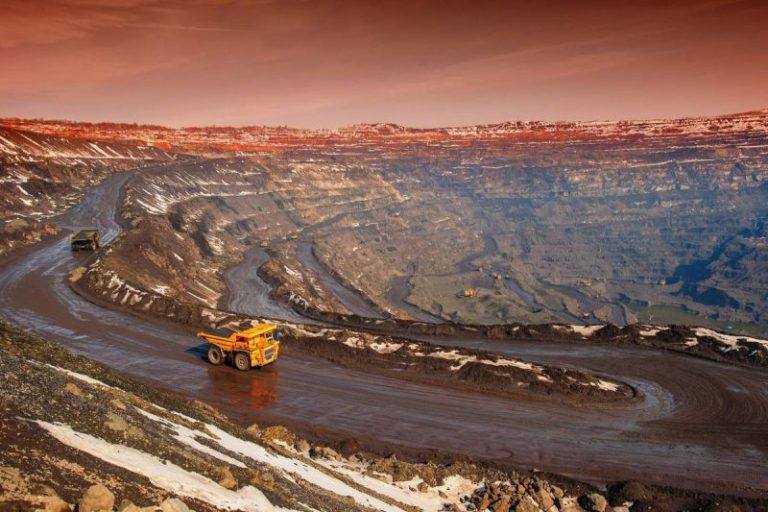
Iron ore prices have strengthened since bottoming out in September 2024, but the base metal faced headwinds in 2025 as tariff threats and investor uncertainty weighed on the market.
Usage in steel makes iron ore one of the most widely used and essential materials in the world, and as a result its fortune is highly dependent on the strength of the construction and manufacturing sectors.
Iron ore has also seen increased demand from electric vehicle (EV) batteries over the last several years.
Among all countries, China leads the world in steel production, but lacks domestic supply to meet demand; it is also the world’s largest importer of base metals. As one of the biggest manufacturing bases and a significant source of demand for construction and EV production, China exerts considerable influence on iron ore prices.
Additionally, as 2026 begins, the definitive period for the EU’s Carbon Border Adjustment Mechanism (CBAM) is starting — it will apply levies to high-carbon imports such as steel.
Iron ore started 2025 at US$99.44 per metric ton (MT) on January 6, then hit US$107.26 on February 12.
The start of March saw a steep decline for prices as they retreated toward the US$100 mark, then climbed back to US$104.25 on April 2; a rout in the base metals market saw prices fall to US$99.05 on April 9.
While other metals recovered, iron ore continued to track lower, reaching US$97.41 on May 5 and ultimately sinking to a yearly low of US$93.41 on July 1. During the third quarter, iron ore prices gained momentum, rising above the US$100 mark in August and reaching a quarterly high of US$106.08 on September 8.
Prices were largely rangebound in Q4, dropping below US$104 only once on November 7, then recovering to post a yearly high of US$107.88 on December 4. Prices had retreated to US$106.13 by December 5.
All in all, prices for iron ore didn’t fare too badly in 2025.
The biggest factor affecting growth was a significant fall-off during the first half of the year as pressures mounted from a continuing slump in the Chinese property sector and the threat of US tariffs.
The Chinese real estate sector has been in steep decline since 2021, when two of the nation’s top developers — Country Garden and Evergrande — declared bankruptcy after incurring hundreds of billions of dollars in debt. Since then, the government has introduced various stimulus measures, but has failed to turn the sector around.
As mentioned, because of the sheer size of the property market in China, it is a significant demand driver for steel products and has an outsized influence on the global iron ore market.
Another noteworthy headwind for iron ore price levels this past year was the threat of US tariffs. In early April, US President Donald Trump announced his “Liberation Day” tariffs, which applied a 10 percent levy across the board, and threatened retaliatory tariffs to close trade deficits with most countries.
The move sparked fears of a global recession and triggered a rout in equities and commodities markets, sending prices plunging. However, most markets rebounded quickly as plans were dialed back after a squeeze in the bond market that sent 10 year treasury yields up by more than half a percentage point.
Further iron ore price pressures came later in the year, when the massive Simandou mine in Guinea shipped its first iron ore, destined for smelters in China, on December 2.
Two consortia of companies own the mine. Blocks three and four have a 45/40/15 ownership split between Rio Tinto (ASX:RIO,NYSE:RIO,LSE:RIO), Chinalco and the Guinea government, and blocks one and two have a 45/35/20 split between Winning International, China Hongquiao Group (HKEX:1378,OTCPL:CHHQF) and United Mining Supply.
The mine will ramp up production over the next 30 months, and is expected to produce 15 million to 20 million MT in 2026 and 40 million to 50 million MT in 2027.
“Construction accounts for about 50 percent of steel consumption in terms of end users. The weakness of the property market has, of course, weighed on steel demand and therefore pig iron production. However, the driver for China’s steel production has been industrialisation and urbanisation during the past two decades,” he said.
Sardain went on to state that despite a shift in focus from fixed assets to manufacturing, services and technology, overall steel demand is set to move lower. Although the decline won’t last forever and the property market will stabilize, the effect of even a mild rebound on steel production will be limited:
“However, steel production and iron ore demand have been supported by strong exports in markets such as Southeast Asia, East Asia, the Middle East, Latin America and Africa, mitigating the impact of a lower domestic steel demand. Whether steel exports can increase from their current level is debatable, and we forecast a lower steel production in China over time.’
On the tariff front, US levies aren’t likely to have much impact. Sardain pointed out that while US steel demand exceeds its production capacity, Chinese imports remain a minimal factor.
Meanwhile, the US is primarily producing steel in lower-carbon electric arc furnaces from ferrous scrap.
Although steel tariffs from Canada and Brazil are set at 25 and 50 percent, respectively, both countries have exemptions for iron ore pellets, and Canadian ferrous scrap is covered under CUSMA provisions.
But with the trade pact set to be renegotiated in 2026, it’s uncertain what it means for steel and, by extension, iron products, in the midterm. The best-case scenario is that Canadian steel will receive an exemption.
Still, the risk remains that current CUSMA blanket exemptions will be removed, allowing the US to apply additional tariffs on Canadian goods crossing the border. Likewise, in Europe, the CBAM came into effect on January 1, 2026.
While the impact may take some time to work through the market, it will still have downstream effects for producers that want to avoid tariffs on imported products. This may be one reason Chinese steel producers are switching from higher-carbon blast furnaces to electric arc furnaces in the smelting process.
“Currently, electric arc furnaces account for about 12 percent of China’s steel production, set to increase to 18 percent by the first part of the next decade,” Sardain said, noting that China is looking to cap its emissions by 2030.
The main challenge for iron ore is waning demand, as the primary input for electric arc furnaces is scrap steel, not raw iron. “Countries which will see their steel production increasing (primarily India, but to some extent Russia, Brazil or Iran) are not iron ore importers because they are self-sufficient. Steel production in the EU is flat to lower with more production coming from electric arc furnaces as part of the decarbonisation process,” Sardain said.
Soft demand growth, however, is expected to meet increasing mine supply, further dragging on prices in 2026.
Sardain suggested that all major iron ore miners will increase their production in 2026, with the largest boost coming from Guinea’s Simandou, which could shake up supply chains.
“The blocks one and two are owned by a Chinese-Singaporean consortium. It will provide China with the opportunity to diversify its supply from the major Australian producers (something that the country tried to do for the past 15 years unsuccessfully) and it will shift the supply-demand momentum in favour of China,” he said.
Additionally, the mine is important because of its 65 percent iron content.
Sardain expects iron ore prices to remain muted in 2026.
“We believe that price should drop below the US$100 per MT mark, although it could stay above this level in H1 due to seasonality … so, overall, prices staying between US$100 to US$105 per MT in H1, then declining below US$100 per MT in H2, with the ramp-up of the Simandou mine being a determining factor,” he said.
This is largely in line with estimates from other firms. BMI is predicting a 2026 price of US$95, while RBC Capital Markets sees iron ore averaging US$98; the overall consensus stands at US$94.
Securities Disclosure: I, Dean Belder, hold no direct investment interest in any company mentioned in this article.

The cobalt market entered 2025 under pressure from a prolonged supply glut, but the balance shifted sharply as the year unfolded, due almost entirely to intervention from the Democratic Republic of Congo (DRC).
After starting the year near nine year lows of US$24,343.40 per metric ton, cobalt metal prices had risen to US$53,005 by the end of December, pushed upward by supply concerns stemming from export limits in the DRC.
“The cobalt market in 2025 was characterised by a significant price recovery following the DRC banning the export of all cobalt from its borders in February,” said Aubry. “By the end of 2025, sulphate prices increased 266 percent, hydroxide increased by 328 percent and metal prices by 130 percent year-to-date.”
As mentioned, cobalt metal prices hit their weakest level since 2016 in January. Global mine output had more than doubled over five years, far outpacing demand growth from electric vehicles and other end uses.
That dynamic changed abruptly in late February, when the DRC — which supplies roughly three-quarters of the world’s cobalt — imposed a four month suspension on cobalt hydroxide exports.
The news lifted cobalt from US$24,495 at the start of the year to above US$34,000 by the end of March, with intra-month highs nearing US$36,300. The move marked the sector’s first meaningful rebound in nearly two years.
As the DRC exhibited control over cobalt supply, the market began to look to the world’s second largest cobalt-producing nation: Indonesia. Indonesia’s cobalt output is largely a by-product of its laterite nickel industry, produced through high-pressure acid leaching (HPAL) plants that process nickel-rich ores.
These facilities generate mixed hydroxide precipitate (MHP), an intermediate containing both nickel and cobalt that can be further refined into battery-grade materials. The model has enabled Indonesia to rapidly scale its cobalt supply, leveraging its dominant nickel position and integrated processing infrastructure.
Indonesia produced about 31,000 metric tons of cobalt in 2024 — roughly 10 percent of global supply — cementing its position as the world’s second largest producer behind the DRC.
Output growth is being driven by HPAL projects targeting up to 500,000 tons per annum (tpa) of mixed hydroxide precipitate, potentially yielding 50,000 tpa of cobalt, though scaling up may prove challenging.
Indonesian MHP, a lower-cost intermediate that is rich in nickel and cobalt, is increasingly viewed by Chinese refiners as a substitute for DRC-sourced cobalt hydroxide.
The DRC’s export ban continued to underpin prices through the second quarter.
Standard-grade cobalt metal was trading near US$15 to US$16 per pound at the time, while cobalt sulfate posted even sharper gains. Despite the rally, sentiment remained cautious. Chinese refiners drew on existing inventories, and trade data showed cobalt units still flowing into China, particularly from Indonesia.
By June, prices had begun to ease as uncertainty mounted over how long the DRC would maintain controls.
Although China imported significant volumes earlier in the year, analysts warned Indonesian supply would be insufficient to fully offset reduced DRC cobalt shipments. Later that month, the DRC extended its export restrictions through September, reinforcing expectations that the market would move toward balance.
By mid-year, Chinese import data confirmed the impact — cobalt hydroxide inflows had fallen sharply, with analysts projecting constrained refinery feed into late 2025 or early 2026.
Prices stabilized in a broad US$33,000 to US$37,000 range through Q3, supported by tightening supply and diminishing inventories. Market participants increasingly viewed the DRC’s actions as a structural shift rather than a temporary correction, signaling the end of the cobalt surplus that had defined the previous two years.
By late 2025, the cobalt market had transformed from one of chronic oversupply to one approaching equilibrium — a reset driven not by demand growth, but by decisive supply-side intervention.
After months of supply disruption, the DRC lifted its full cobalt export ban in mid-October, replacing it with a rigid quota system that will shape the market through 2026.
Under the new framework, annual DRC exports are capped at about 96,600 metric tons, roughly half of 2024 levels, with just 18,125 metric tons scheduled for shipment in Q4 2025.
This structural tightening helped sustain elevated prices that surged above US$47,000 by late October, levels not seen since early 2023, amid persistent feedstock shortages and constrained exports.
DRC quotas have provided a degree of market clarity, with major producers like CMOC Group (OTCPL:CMCLF) receiving significant allocations that underpin production plans. Despite robust output guidance, inventories outside the DRC remain tight, and market participants see continued upward price pressure as the quota system curtails supply.
“The DRC’s quota system is set to squeeze supply in the next two years — unless the country revises quotas higher,” wrote Fastmarkets’ Oliver Masson in a December market update.
“Prices are already considerably higher than they were at the beginning of the year, and they are likely to remain elevated for as long as current quota levels remain in force,’ he said. ‘Cobalt is mostly used in batteries, and the longer prices remain elevated, the more likely it is that EV manufacturers will seek to move to low-cobalt or cobalt-free chemistries where feasible. This could slow demand in the medium term.”
Looking ahead to 2026, analysts see the cobalt market shifting into a deficit as export caps bite and global feedstock availability shrinks. Fastmarkets projects a structural shortfall of about 10,700 metric tons against demand near 292,300 metric tons, driven by DRC quota limits and ongoing drawdowns of stocks.
Industry forecasters also anticipate that reduced shipments, combined with a stubbornly tight pipeline, will support stronger average prices next year. Some forecasts suggest cobalt could average near US$55,000 in 2026 as export quotas supplant the 2025 ban. Indonesian supply is emerging as a secondary source, with production climbing, but most analysts agree it will be insufficient to offset DRC constraints in the near term.
After a year of dramatic swings driven by supply policy in the DRC, 2026 is shaping up as the first sustained deficit environment in the cobalt market, with prices expected to remain elevated amid structural tightening.
“Prices have substantially recovered over 2025 and are expected to remain elevated in 2026 as the DRC limits exports,” said Aubry. “There is a significant potential upside risk as dwindling ex-DRC stocks present the risk of demand destruction towards the end of the year.”
Securities Disclosure: I, Georgia Williams, hold no direct investment interest in any company mentioned in this article.
Trading resumes in:
Company: Rzolv Technologies Inc.
TSX-Venture Symbol: RZL
All Issues: Yes
Resumption (ET): 1:00 PM
CIRO can make a decision to impose a temporary suspension (halt) of trading in a security of a publicly-listed company. Trading halts are implemented to ensure a fair and orderly market. CIRO is the national self-regulatory organization which oversees all investment dealers and trading activity on debt and equity marketplaces in Canada.
SOURCE Canadian Investment Regulatory Organization (CIRO) – Halts/Resumptions
News Provided by PR Newswire via QuoteMedia
Eagle Energy Metals Corp. (“Eagle” or the “Company”), a next-generation nuclear energy company with rights to the largest open pit-constrained, measured and indicated uranium deposit in the United States and proprietary Small Modular Reactor (“SMR”) technology, is pleased to announce today that it has engaged BBA USA Inc. (“BBA”), an eminent consulting firm with more than 45 years of experience in the energy and natural resources sector, to develop and design a limited drilling campaign in support of an eventual Pre-Feasibility Study (“PFS”) at its Aurora Uranium Project (“Aurora” or the “Project”).
BBA will design and optimize the number, location, and orientation of drill holes to help achieve specific objectives that will each play a critical role in the completion of the PFS. These objectives include (1) advanced metallurgical testing and process flow sheet design, (2) hydrogeological analysis, (3) geotechnical and rock mechanics analysis, (4) mineral resource classification enhancement, and (5) mineral resource expansion. BBA previously completed Aurora’s S-K 1300 Mineral Resource Estimate and authored the related Technical Report Summary in August 2025, providing technical continuity as the Project advances.
“We’re seeing sustained demand for nuclear power translate into real demand for uranium, particularly for projects located in the U.S.,” said Mark Mukhija, CEO of Eagle Energy Metals. “Advancing Aurora with BBA is about making sure this asset is ready to meet that demand as the market continues to tighten. We believe that the continued development at Aurora paired with this significant industry demand furthers our ability to become a strategic national asset and leading domestic supplier of nuclear power.”
BBA’s engagement supports Eagle’s broader strategy as the Company continues to progress toward its planned Nasdaq listing under the ticker symbol “NUCL” in connection with its proposed business combination with Spring Valley Acquisition Corp. II (OTC: SVIIF).
Demand for nuclear power is increasing as technology companies seek reliable, long-term energy to support artificial intelligence and large-scale data centers. Recently, Meta announced agreements with nuclear energy providers including TerraPower and Oklo to help supply electricity for its planned Prometheus AI supercluster in Ohio, reinforcing the growing role of nuclear energy and the importance of a secure, domestic uranium supply.
For more information, please visit Eagleenergymetals.com.
About Eagle Energy Metals Corp.
Eagle Energy Metals Corp. is a next-generation nuclear energy company that combines domestic uranium exploration with proprietary Small Modular Reactor (SMR) technology. The Company holds the rights to the largest open pit-constrained, measured and indicated uranium deposit in the United States, located in southeastern Oregon. This includes the Aurora deposit, with 32.75Mlbs Indicated and 4.98Mlbs Inferred (SK-1300 TRS) of near-surface uranium resource, and the adjacent Cordex deposit, which offers significant potential to expand the project’s overall resource inventory. By integrating advanced SMR technology with a sizeable uranium asset, Eagle is building an integrated nuclear platform positioned to help restore American leadership in the global nuclear industry. For more information about Eagle Energy Metals Corp., visit www.eagleenergymetals.com.
About Spring Valley Acquisition Corp. II
Spring Valley Acquisition Corp. II (“SVII”) (SVIIF, SVIRF, SVIUF, and SVIWF) is a part of a family of investment vehicles formed for the purpose of acquiring or merging with a business focused on the energy and decarbonization industries. Over the past 5 years, Spring Valley has raised $690 million in three IPOs. SVII is led by Christopher D. Sorrells, Chief Executive Officer and Chairman, and Robert Kaplan, Chief Financial Officer and Head of Business Development. SVII’s board of directors includes Christopher D. Sorrells (Chairman), Sharon Youngblood, Rich Thompson, David Buzby, David Levinson, and Kevin Pohler. Its Sponsor group includes Pearl Energy; a $3.0 billion Texas-based firm focused on the North American energy sector. Spring Valley I successfully completed its business combination with NuScale Power, a leading U.S. small modular reactor (“SMR”) technology company in May 2022. SVII maintains a corporate website at https://sv-ac.com.
Additional Information and Where to Find It
In connection with the transactions (the “Proposed Business Combination”) contemplated by the Merger Agreement between Spring Valley Acquisition Corp. II (“SVII”), Eagle Energy Metals Corp. (“Eagle”), and Eagle Nuclear Energy Corp. (“New Eagle”), New Eagle filed with the Securities and Exchange Commission (the “SEC”) a registration statement on Form S-4 (File No. 333-290631) (as amended, the “Registration Statement”), which includes a preliminary prospectus with respect to New Eagle’s securities to be issued in connection with the Proposed Business Combination and a preliminary proxy statement to be distributed to holders of SVII’s Class A Ordinary Shares in connection with SVII’s solicitation of proxies for the vote by SVII’s shareholders with respect to the Proposed Business Combination and other matters described in the Registration Statement (collectively, the “Proxy Statement”). After the SEC declares the Registration Statement effective, SVII plans to file the definitive Proxy Statement with the SEC and to mail copies to shareholders of SVII as of a record date to be established for voting on the Proposed Business Combination and other matters described in the Registration Statement. This document does not contain all of the information that should be considered concerning the Proposed Business Combination and is not a substitute for the Registration Statement, Proxy Statement or for any other document that SVII, New Eagle or Eagle may file with the SEC. Before making any investment or voting decision, investors and security holders of SVII, New Eagle and Eagle are urged to read the Registration Statement and the Proxy Statement, and any amendments or supplements thereto, as well as all other relevant materials filed or that will be filed with the SEC in connection with the Proposed Business Combination as they become available because they will contain important information about New Eagle, Eagle, SVII and the Proposed Business Combination. Investors and security holders will be able to obtain free copies of the Registration Statement, the Proxy Statement and all other relevant documents filed or that will be filed with the SEC by SVII, New Eagle or Eagle through the website maintained by the SEC at www.sec.gov. The information contained on, or that may be accessed through, the websites referenced in this document is not incorporated by reference into, and is not a part of, this document.
Participants in the Solicitation
New Eagle, Eagle, SVII and their respective directors, executive officers and other members of management and employees may, under the rules of the SEC, be deemed to be participants in the solicitations of proxies from SVII’s shareholders in connection with the Proposed Business Combination. For more information about the names, affiliations and interests of SVII’s directors and executive officers, please refer to SVII’s Annual Report on Form 10-K for the year ended December 31, 2024, which was filed with the SEC on April 11, 2025 (the “2024 Form 10-K”) and the Registration Statement, Proxy Statement and other relevant materials filed or to be filed with the SEC in connection with the Proposed Business Combination when they become available. Additional information regarding the participants in the proxy solicitation and a description of their direct and indirect interests, which may, in some cases, be different than those of SVII’s shareholders generally, will be included in the Registration Statement and the Proxy Statement. Shareholders, potential investors and other interested persons should read the Registration Statement and the Proxy Statement, and any amendments or supplements thereto, carefully, before making any voting or investment decisions. You may obtain free copies of these documents from the sources indicated above.
No Offer or Solicitation
This document shall not constitute a “solicitation” as defined in Section 14 of the Exchange Act of 1934, as amended. This document shall not constitute an offer to sell or exchange, the solicitation of an offer to buy or a recommendation to purchase, any securities, or a solicitation of any vote, consent or approval, nor shall there be any sale, issuance or transfer of securities in any jurisdiction in which such offer, solicitation or sale may be unlawful under the laws of such jurisdiction. No offering of securities in the Proposed Business Combination shall be made except by means of a prospectus meeting the requirements of the Securities Act or an exemption therefrom.
Cautionary Note Regarding Forward-Looking Statements
Certain statements included in this document are not historical facts but are forward-looking statements. All statements other than statements of historical facts contained in this document are forward-looking statements. The forward-looking statements are based on current expectations and are inherently subject to uncertainties and changes in circumstance and their potential effects. There can be no assurance that future developments will be those that have been anticipated. These forward-looking statements involve a number of risks, uncertainties or other assumptions that may cause actual results or performance to be materially different from those expressed or implied by these forward-looking statements. You should carefully consider the factors discussed in this document and the other risks and uncertainties described in the “Risk Factors” section of the 2024 Form 10-K, the risks described or to be described in the Registration Statement, the Proxy Statement, and any amendments or supplements thereto, and those discussed and identified in filings made with the SEC by SVII, New Eagle or Eagle from time to time. Eagle, New Eagle, and SVII caution you against placing undue reliance on forward-looking statements, which reflect current beliefs and are based on information currently available as of the date a forward-looking statement is made. Forward-looking statements set forth in this document speak only as of the date of this document. Neither Eagle, SVII, nor New Eagle undertakes any obligation to revise forward-looking statements to reflect future events, changes in circumstances, or changes in beliefs. In the event that any forward-looking statement is updated, no inference should be made that additional updates will be made with respect to that statement, related matters, or any other forward-looking statements. Any corrections or revisions and other important assumptions and factors that could cause actual results to differ materially from forward-looking statements, including discussions of significant risk factors, may appear, up to the consummation of the Proposed Business Combination, in SVII’s public filings with the SEC, which are or will be (as appropriate) accessible at www.sec.gov, and which you are advised to review carefully.
Investor Relations Contact:
775-335-2029
info@eagleenergymetals.com
Media Relations Contact:
Gateway Group
Zach Kadletz, Brenlyn Motlagh
949-574-3860
EAGLE@Gateway-grp.com
Source
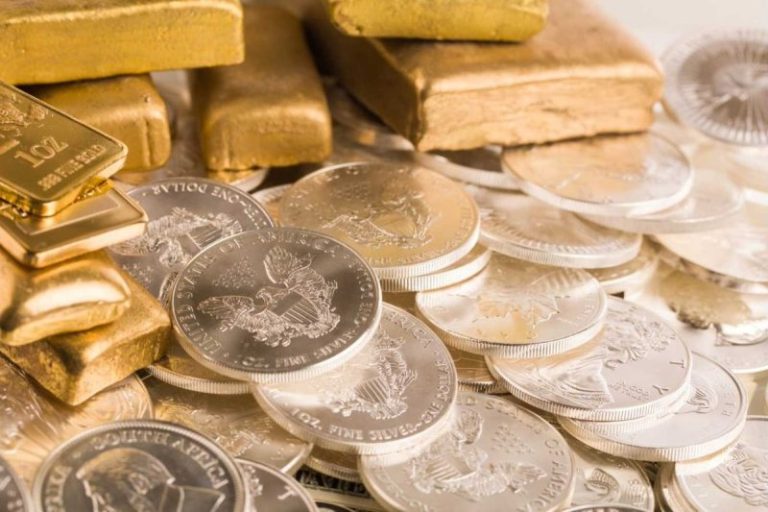
Gold marked a new price milestone on Monday (January 12), continuing its record-breaking run into 2026.
The spot price rose as high as US$4,630.01 per ounce, hitting that point at 8:14 a.m. PST.
Gold spot price chart, January 4 to 12, 2026.
The yellow metal’s latest rise adds to an ongoing historic run.
After starting 2025 around US$2,640, gold had risen to the US$3,200 level by April. It stayed within a fairly flat range until the end of August, when it launched higher once again, breaking US$4,300 in mid-October.
The price of gold took a breather following that move, even falling briefly below US$4,000; however, its retracement was neither as steep nor as long as many market watchers expected it to be.
Gold began gaining steam again in mid-November, and took off again in earnest at the end of 2025. This week it’s powering even higher along with silver, which posted its own all-time high of US$86.06 per ounce on Monday.
Both metals benefit from geopolitical tensions and economic uncertainty, which have been present on a global scale over the past the year. Interest rate cuts from the US Federal Reserve have provided support too, as have expectations of easier monetary policy after Fed Chair Jerome Powell’s term ends later this year.
This latest precious metals price surge comes as US President Donald Trump’s feud with the Fed over interest rates has taken an eyebrow-raising turn. On January 9, the US Department of Justice (DOJ) served the Fed with grand jury subpoenas targeting Powell with a criminal indictment.
The subpoenas to the central bank are related to Powell’s June 2025 testimony before the Senate Banking Committee concerning the Fed’s US$2.5 billion renovation of two Washington, DC, office buildings.
In a statement released on January 11, Powell said the DOJ investigation has nothing to do with the renovation project and everything to do with Trump’s goal to goad the Fed into lowering interest rates.
“The threat of criminal charges is a consequence of the Federal Reserve setting interest rates based on our best assessment of what will serve the public, rather than following the preferences of the President,” said Powell. “This is about whether the Fed will be able to continue to set interest rates based on evidence and economic conditions—or whether instead monetary policy will be directed by political pressure or intimidation.”
When asked about the probe by NBC News, Trump denied any involvement or knowledge of the investigation: “I don’t know anything about it, but he’s certainly not very good at the Fed, and he’s not very good at building buildings.’
When further questioned if the investigation has anything to do with the pressure his administration is placing on the Fed to lower rates, Trump replied, “No. I wouldn’t even think of doing it that way. What should pressure him is the fact that rates are far too high. That’s the only pressure he’s got.”
Ozkardeskaya explained that the economic data currently coming out of US jobs and consumer price index reports would in normal situations lead the Fed to put rate cuts on hold.
“If the Fed can’t set policy based on economic data and inflation picks up, you want assets that temper inflation risks: gold, commodities, inflation-linked bonds, dividend-paying stocks, and tech,” she added.
“In my opinion, while these concerns do not imply an imminent collapse of the dollar, they are sufficient to reduce its appeal relative to gold, particularly during periods when markets demand clarity and credibility in monetary policy.”
The Trump administration’s criminal investigation into Powell adds another layer to the already-volatile economic and geopolitical environment that has investors seeking safe-haven assets.
Eugenia Mykuliak, founder and executive Director of B2PRIME Group, believes that a threat to Fed independence also poses significant risks to the US economy.
Gold also continues to benefit from strong central bank buying, while silver’s industrial side is attracting attention. Although it is valued as an investment metal, silver is key for technology such as solar panels.
Elsewhere in the precious metals space, platinum rose close to record highs on Monday, reaching US$2,360.50 per ounce. Palladium remains below its top price level, but is elevated above US$1,900 per ounce.
Securities Disclosure: I, Charlotte McLeod, hold no direct investment interest in any company mentioned in this article.

Brixton Metals offers high-impact copper-gold discovery potential at its flagship Thorn Project, supported by strategic investment from BHP and partner-funded exploration on non-core assets with Ivanhoe Electric and Eldorado Gold, providing diversified upside, technical validation and non-dilutive funding.
Brixton Metals (TSXV:BBB,OTCQB:BBBXF,FRA:8BX1) is a Canadian mineral exploration company focused on copper, gold, silver, and critical minerals across North America. Its flagship Thorn Project in British Columbia is a district-scale project with multiple porphyry and epithermal targets.
In addition to Thorn, Brixton Metals is strategically advancing non-core projects through partnerships and option agreements with companies such as Ivanhoe Electric (NYSE American:IE;TSX:IE) and Eldorado Gold (TSX:ELD,NYSE:EGO). These partnerships provide partner-funded exploration, allowing Brixton Metals to retain upside exposure while conserving capital and strengthening its balance sheet. This approach enables the company to focus on high-impact targets while mitigating exploration risk.
Brixton Metals’ management team, led by chairman and CEO Gary R. Thompson, brings decades of experience in resource exploration, project development, and capital markets. The team’s expertise allows the company to efficiently advance multiple projects while maintaining exposure to a diversified portfolio of metals.
With global demand for copper and critical minerals set to surge over the next 25 years—driven by renewable energy, electrification, and industrial decarbonization—Brixton Metals is well positioned to capitalize on this green revolution. By combining discovery potential at its flagship project, strategic monetization of non-core assets, and disciplined exploration, Brixton Metals is advancing toward its next growth milestones while delivering significant value for investors.
The Thorn Project is Brixton Metals’ flagship project, covering approximately 2,945 sq km in northwestern British Columbia and located on trend of the province’s Golden Triangle, renowned for world-class porphyry and epithermal systems. The project hosts porphyry-style alteration with copper, gold, silver, and molybdenum, with significant exploration potential. The project is accessible via a 45-minute flight from Whitehorse, Yukon.
The Langis and Hudson Bay projects are primary silver-cobalt-nickel brownfield opportunities located in the historic Cobalt Mining District of Ontario, which has a regional production history of over 600 million ounces of silver. Both are past-producing, high-grade mines.
Since 2016, Brixton Metals has actively explored these sites, with drilling at Langis yielding over 220 intervals exceeding 100 g/t silver, including high-grade intercepts such as 15,436 g/t silver and 1.98 percent cobalt. The projects benefit from year-round road access and proximity to existing infrastructure, including a railway and the Electra Battery Metals cobalt refinery 10 km away.
Located in western Montana, Hog Heaven is a historical silver-gold-copper property with significant porphyry potential. Hog Heaven is currently under an earn-in agreement where Ivanhoe Electric can earn up to 75 percent interest through staged cash payments and exploration expenditures. This arrangement provides funding for exploration while retaining Brixton Metals’ upside exposure.
The property contains multiple mineralized zones, including historical drill targets with notable copper, gold, and silver intercepts. Ivanhoe’s initial drilling has confirmed mineralization and highlighted the project’s potential for large-scale porphyry systems. Brixton retains exposure to exploration success while de-risking development costs.
The Atlin Goldfields Project is located in northwestern British Columbia, an area historically known for placer gold production, offering strong potential for hard-rock gold discoveries. Brixton Metals has optioned the project to Eldorado Gold, which is funding exploration activities under a structured earn-in agreement.
Exploration at Atlin focused on identifying orogenic and intrusion-related gold targets, with early work confirming continuity of mineralization in key areas. The property benefits from proximity to historic mining infrastructure and geology conducive to high-grade gold zones, providing an attractive exploration and growth opportunity.
Gary Thompson is a co-founder of Brixton Metals with over 25 years of experience in the resources sector, spanning precious and base metals, oil and gas, and geothermal energy. He has led public companies since 2006 and has held senior roles in both junior and major mining companies, including Newmont Mining, NovaGold Resources, and Encana Corporation. Thompson took Cayley Geothermal public in 2006 through the acquisition of Sierra Geothermal Power and served as CEO until its acquisition by Ram Power in 2010.
Cale Moodie, a co-founder of Brixton Metals, has over 15 years of public markets experience. A CPA and serial entrepreneur, he has served as founder, CEO, CFO, director, and audit committee chair for multiple publicly traded companies on the TSXV and CSE. Moodie holds a Bachelor of Science from UBC and earned his CPA designation while working at KPMG in Vancouver. He has been involved in over $150 million in financings for resource and technology companies.
Michael Rapsch has over 18 years of capital markets experience in the resource sector, including senior roles in corporate communications and corporate development. He led investor relations and marketing programs for SilverCrest Mines until its acquisition by First Majestic in 2015, and from 2015 to 2018 managed investor relations for SilverCrest Metals, owner of the Las Chispas silver-gold project in Mexico. In 2019, he founded Cologne Communications, providing investor relations consulting to publicly traded resource companies, and has been instrumental in capital raises and market communications throughout his career.