Author

admin

Browsing

Apollo Silver Corp. (‘Apollo Silver’ or the ‘Company’) (TSX.V:APGO, OTCQB:APGOF, Frankfurt:6ZF0) is pleased to announce that it has closed the first tranche of its previously announced upsized non-brokered private placement (the ‘Offering’) and has issued an aggregate of 3,000,000 units (the ‘Units’) at a price of $5.00 per Unit for aggregate gross proceeds of $15,000,000.

As previously announced, Eric Sprott, one of Apollo Silver’s largest shareholders, participated in the first tranche and subscribed for 2,500,000 Units, for gross proceeds of $12,500,000. The first tranche also included participation from Apollo Silver insiders, including certain directors and officers of the Company.

Eric Sprott, through 2176423 Ontario Ltd., a corporation beneficially owned by him, acquired 2,500,000 Units pursuant to the first tranche of the Offering for total consideration of $12,500,000. Prior to the Offering, Mr. Sprott beneficially owned and controlled 3,688,889 Shares and 1,388,889 Warrants, representing approximately 6.5% of the outstanding Shares on a non-diluted basis and 8.7% of the outstanding Shares on a partially-diluted basis assuming exercise of such Warrants.

As a result of closing the first tranche of the Offering, Mr. Sprott now beneficially owns and controls 6,188,889 Shares and 3,888,889 Warrants, representing approximately 10.3% of the outstanding Shares on a non-diluted basis and 15.8% of the outstanding Shares on a partially-diluted basis assuming exercise of such Warrants. The securities are held for investment purposes.

Mr. Sprott has a long-term view of the investment and may acquire additional securities including on the open market or through private acquisitions or sell the securities including on the open market or through private dispositions in the future depending on market conditions, reformulation of plans and/or other relevant factors.

A copy of the early warning report with respect to the foregoing will appear on Apollo Silver’s profile on SEDAR+ at www.sedarplus.ca and may also be obtained by calling Mr. Sprott’s office at (416) 945-3294 (2176423 Ontario Ltd., 7 King Street East, Suite 1106, Toronto Ontario M5C 3C5).

The first tranche of the Offering included participation by certain insiders of the Company for an aggregate of 471,000 Units totaling gross proceeds of $2,355,000. Such participation constitutes a ‘related party transaction’ under Multilateral Instrument 61-101 – Protection of Minority Security Holders in Special Transactions (‘MI 61-101’). The issuance of securities to insiders is exempt from the valuation requirement pursuant to section 5.5(b) of MI 61-101, as the Company’s shares are not listed on a specified market, and from the minority shareholder approval requirement pursuant to section 5.7(a) of MI 61-101, as the fair market value of the securities issued to related parties does not exceed twenty five percent of the Company’s market capitalization.

A fund managed by Jupiter Asset Management has subscribed for Units under the Offering, which are expected to be issued in a subsequent and final tranche upon receipt of, and subject to, the completion of additional regulatory submissions and acceptance by the TSX Venture Exchange (‘TSXV’). The first tranche of the Offering remains subject to final approval of the TSXV.

‘The participation of a key shareholder and Apollo Silver insiders reflects strong alignment around the strategic value of primary silver assets in tightening silver markets,’ said Ross McElroy, President and CEO of Apollo Silver. ‘This financing further reinforces our positioning as a silver-focused company advancing large-scale assets in stable jurisdictions.’  

Each Unit issued pursuant to the Offering consists of one common share (a ‘Share’) in the capital of the Company and one common Share purchase warrant (a ‘Warrant’). Each Warrant entitles the holder thereof to purchase one Share at an exercise price of $7.00 for a period of 24 months from the closing date of the Offering.

In connection with subscriptions received in the first tranche of the Offering, the Company paid aggregate finder’s fees totaling $312,500, consisting of 62,500 Units issued to Research Capital Corporation on the same terms as the Units issued under the Offering, except that the Warrants comprising such Units are non-transferable.

The securities issued under the first tranche of the Offering are subject to a four-month hold period from the date of closing. The Company intends to use the net proceeds from the Offering to continue advancing the Calico Silver Project in San Bernardino, California; support community relations initiatives at the Cinco de Mayo Silver Project in Chihuahua, Mexico; cover ongoing property maintenance costs at both projects; and for general corporate purposes. The Offering remains subject to the final acceptance of the TSXV.

The Shares have not been, and will not be, registered under the United States Securities Act of 1933, as amended (the ‘U.S. Securities Act’), or any U.S. state securities laws, and may not be offered or sold in the United States without registration under the U.S. Securities Act and all applicable state securities laws or compliance with the requirements of an applicable exemption therefrom. This news release shall not constitute an offer to sell or the solicitation of an offer to buy securities in the United States, nor shall there be any sale of these securities in any jurisdiction in which such offer, solicitation or sale would be unlawful.

About Apollo Silver Corp.

Apollo Silver is advancing one of the largest undeveloped primary silver projects in the US. The Calico project hosts a large, bulk minable silver deposit with significant barite and zinc credits – recognized as critical minerals essential to the US energy and medical sectors. The Company also holds an option on the Cinco de Mayo Project in Chihuahua, Mexico, which is host to a major carbonate replacement (CRD) deposit that is both high-grade and large tonnage. Led by an experienced and award-winning management team, Apollo Silver is well positioned to advance the assets and deliver value through exploration and development.

Please visit www.apollosilver.com for further information.

ON BEHALF OF THE BOARD OF DIRECTORS

Ross McElroy
President and CEO

For further information, please contact:

Email: info@apollosilver.com

Telephone: +1 (604) 428-6128

Neither the TSX Venture Exchange nor its Regulation Services Provider (as that term is defined in the policies of the TSX Venture Exchange) accepts responsibility for the adequacy or accuracy of this release.

Cautionary Statement Regarding ‘Forward-Looking’ Information

This news release includes ‘forward-looking statements’ and ‘forward-looking information’ within the meaning of Canadian securities legislation. All statements included in this news release, other than statements of historical fact, are forward-looking statements including, without limitation, statements with respect to the expected timing and receipt of final approval of the first tranche of the Offering, the expected timing and receipt of final approval of the subsequent and final tranche of the Offering, and the intended use of proceeds from the Offering. Forward-looking statements include predictions, projections and forecasts and are often, but not always, identified by the use of words such as ‘anticipate’, ‘believe’, ‘plan’, ‘estimate’, ‘expect’, ‘potential’, ‘target’, ‘budget’ and ‘intend’ and statements that an event or result ‘may’, ‘will’, ‘should’, ‘could’ or ‘might’ occur or be achieved and other similar expressions and includes the negatives thereof.

Forward-looking statements are based on the reasonable assumptions, estimates, analysis, and opinions of the management of the Company made in light of its experience and its perception of trends, current conditions and expected developments, as well as other factors that management of the Company believes to be relevant and reasonable in the circumstances at the date that such statements are made. Forward-looking information is based on reasonable assumptions that have been made by the Company as at the date of such information and is subject to known and unknown risks, uncertainties and other factors that may have caused actual results, level of activity, performance or achievements of the Company to be materially different from those expressed or implied by such forward-looking information, including but not limited to: risks associated with mineral exploration and development; metal and mineral prices; availability of capital; accuracy of the Company’s projections and estimates; realization of mineral resource estimates, interest and exchange rates; competition; stock price fluctuations; availability of drilling equipment and access; actual results of current exploration activities; government regulation; political or economic developments; environmental risks; insurance risks; capital expenditures; operating or technical difficulties in connection with development activities; personnel relations; and changes in Project parameters as plans continue to be refined. Forward-looking statements are based on assumptions management believes to be reasonable, including but not limited to the price of silver, gold and barite; the demand for silver, gold and barite; the ability to carry on exploration and development activities; the timely receipt of any required approvals; the ability to obtain qualified personnel, equipment and services in a timely and cost-efficient manner; the ability to operate in a safe, efficient and effective matter; and the regulatory framework regarding environmental matters, and such other assumptions and factors as set out herein. Although the Company has attempted to identify important factors that could cause actual results to differ materially from those contained in forward-looking information, there may be other factors that cause results not to be as anticipated, estimated or intended. There can be no assurance that forward-looking statements will prove to be accurate and actual results, and future events could differ materially from those anticipated in such statements. Accordingly, readers should not place undue reliance on forward looking information contained herein, except in accordance with applicable securities laws. The forward-looking information contained herein is presented for the purpose of assisting investors in understanding the Company’s expected financial and operational performance and the Company’s plans and objectives and may not be appropriate for other purposes. The Company does not undertake to update any forward-looking information, except in accordance with applicable securities laws.

News Provided by GlobeNewswire via QuoteMedia

This post appeared first on investingnews.com

The vanadium market remained subdued in H1 2025, weighed down by persistent oversupply and weak usage from the steelmaking sector, even as new demand avenues like energy storage gained attention.

Price data shows that vanadium pentoxide in major regions such as the US, China and Europe traded in roughly the US$9,300 to US$13,000 per metric ton range in Q1 and Q2, with no dramatic price spikes. Modest support was provided by demand for vanadium redox flow batteries (VRFBs) and stricter Chinese rebar standards.

Producers reported ongoing pressure on prices and profitability, with oversupply from China and Russia continuing to temper upward momentum and buyers delaying purchases amid resilient feedstock availability.

At the same time, vanadium’s role in long‑duration energy storage, particularly VRFBs, emerged as a potential growth driver as the year progressed, hinting at deeper structural demand beyond traditional industrial uses.

“The expected growth in vanadium demand from VRFBs as an energy storage solution at the grid-level represents a bright future for increased consumption,” a July CRU report reads. “However, the present reality is vanadium consumption is still dominated by use as a ferroalloy (ferrovanadium and vanadium nitride).”

Vanadium market to see structural change?

As 2025 progressed, the vanadium market continue to grapple with weakness as steel production demand struggled to absorb available supply and the broader metals complex remained in the doldrums.

Vanadium pentoxide prices stayed under pressure in most regions, with figures from the second quarter showing US prices near US$9,584, and Chinese prices around US$8,655, reflecting tepid buying activity and ongoing oversupply, even as emerging applications such as VRFBs sustained pockets of interest.

As mentioned, a key factor has been sluggish steel sector demand. Globally, crude steel production has weakened, particularly in China — historically the largest vanadium consumer — slowing vanadium’s traditional core market as rebar and structural steel consumption softened amid broader economic headwinds.

Although new Chinese rebar standards introduced earlier in 2025 mandate higher vanadium intensity in steel, anticipated increases in consumption have only partially materialized, leaving producers competing for limited contracts and putting downward pressure on average ferrovanadium and vanadium pentoxide prices.

At the same time, market participants reported that producers were cutting output and tightening supply in response to persistent low pricing. Several companies in China and the west curtailed production or deferred capital projects, indicating that margins were strained and cost discipline was becoming an industry imperative.

Global vanadium production has been declining since 2021, when the US Geological Survey reported total global output of 105,000 metric tons; that’s compared to 2024’s 100,000 metric tons.

Emerging vanadium demand from energy storage

Despite headwinds, structural changes in vanadium demand were evident in H2 2025.

VRFBs continued to gain momentum as more utility‑scale projects were announced and commissioned. The technology’s appeal lies in its scalability, long cycle life and safety profile compared to conventional lithium‑ion systems; installations in China, Japan and North America point to a slowly growing pipeline of demand outside steel.

Industry analysts have noted that vanadium demand from VRFBs could nearly triple by 2040 as long‑duration storage becomes a more integral part of renewable power grids, even if these applications currently represent a small fraction of total consumption. In China alone, installations of large‑scale VRFB systems were projected to consume tens of thousands of metric tons of vanadium pentoxide equivalent in 2025, offsetting some weakness in steel alloying use.

This bifurcation — weak traditional demand versus nascent battery demand — typified H2, producing a market where prices remained subdued, but underlying interest in new applications suggested a shift in fundamentals.

All eyes on Australia’s vanadium potential

Although US Geological Survey data shows Australia doesn’t currently produce vanadium, the nation holds the largest recorded vanadium reserves at more than 8.5 million metric tons.

Looking to tap this potential, the country has focused its attention on the industrial metal.

In January 2025, Australian Vanadium (ASX:AVL,OTCPL:ATVVF) received environmental approval from Western Australia for the Gabanintha vanadium project. The approval, granted by Minister for Environment Reece Whitby under section 45 of the Environmental Protection Act 1986 (WA), cleared the way for construction and production.

Shortly afterwards, the company’s namesake Australian Vanadium project, located in Western Australia’s Murchison province, earned a green energy major project designation.

The Queensland government has also invested in expanding refinement and processing capacity. Last May, construction began at Queensland’s first resources common user facility at the Cleveland Bay Industrial Park in Townsville.

The facility is designed to support the development, extraction and production of critical minerals, enabling the creation of mineral samples at scale and serving as a testing hub for commercializing production processes.

The government has identified vanadium as the initial focus, highlighting its key role in renewable energy applications.

In November, Western Australia launched a AU$150 million vanadium battery energy storage system project, aiming to make the state a leader in renewable energy and energy storage.

The 50 megawatt/500 megawatt-hour flow battery will use locally sourced and processed vanadium, and is expected to be the largest of its kind in Australia, supporting advanced manufacturing and a domestic supply chain.

Growing energy storage demand meets tightening supply

Looking ahead, analysts forecast that vanadium dynamics will begin to tilt in favor of tighter supply and strengthened pricing, though the timing and pace remain contingent on several variables.

A combination of reduced output and rising consumption — particularly from VRFBs — is expected to push the market toward a deficit by late 2026, encouraging a gradual recovery in vanadium prices.

Central to that shift is the energy transition. Demand for vanadium in long‑duration energy storage is projected to rise sharply as utilities and grid operators seek cost‑effective solutions to buffer renewables and stabilize electricity systems.

The vanadium market’s long‑term promise is underpinned by projections that VRFB deployment could grow at double‑digit rates, even as the bulk of demand remains tied to steel alloying.

On the supply side, a cautionary mood among producers — reflected in delayed project developments and tighter output discipline — may limit new material flowing onto the market in 2026.

With prices remaining below historical averages, many potential expansions are unbankable in the current price environment, meaning that new supply additions are likely to be limited absent a sustained price uptick.

“Vanadium market prices are likely to rise from late 2026, supported by tightening supply and growing demand from VRFBs. With weak prices in 2024 and 2025, driven by sluggish steel demand, vanadium producers have curbed output,” a CRU report published this past December notes.

Analysts at CRU project a late-year rebound, but caution that demand could triple by 2040 far outpacing production.

“Meanwhile VRFB demand is accelerating, evidenced by robust vanadium electrolyte project pipeline,” the firm’s report continues. “Rising demand will quickly run into depressed production, where prices will need to increase to support higher utilisation rates in mid-to late 2026.”

Securities Disclosure: I, Georgia Williams, hold no direct investment interest in any company mentioned in this article.

This post appeared first on investingnews.com

As calls grow to modernize America’s aging retirement system, Franklin Templeton is positioning blockchain as the key to the next evolution of asset management infrastructure.

In a recent survey of 52 leading retirement industry entities, the global investment firm found near-universal agreement that modernization is urgent. This discovery underscores structural inefficiencies across the US retirement landscape, from legacy administration and fragmented data systems to outdated product delivery models.

In a summary statement accompanying the results of the report, Crossley maintained that “the next phase of modernization won’t just digitize existing systems — it will redefine them.”

US retirement system at inflection point

The executives interviewed, who are responsible for roughly US$18 trillion in assets, described legacy infrastructure as fragmented, inefficient and ill-suited to modern employment patterns and participant expectations.

“We expected (a) debate about the pace of change or which innovations to prioritize. Instead, we heard near-universal agreement that … incremental improvements won’t be enough,’ he continued.

“One participant told us the legacy infrastructure needs to be burned down and built up from scratch. When industry leaders … are that candid about structural deficiencies, it signals we’ve reached a genuine inflection point.”

Crossley explained that there are three forces driving urgency:

  • Traditional safety nets are eroding as Social Security faces funding pressure and defined benefit pensions fall. The expert told INN that defined benefit pensions have shrunk from 68 percent of retirement assets in the mid-1970s to around 28 percent today.
  • Job tenure has shortened dramatically, with Gen Z averaging less than three years per role versus nearly a decade for older cohorts, breaking systems built around long-term work at a single entity.
  • Neobrokers and fintech platforms are increasing the competitive pressure on established companies, attracting younger investors and entering the retirement product market.

How blockchain solves for operational efficiency

While blockchain adoption in retail investment remains gradual, enterprise-level integrations have advanced steadily in recent years. Franklin Templeton itself has issued tokenized money market funds and piloted on-chain share registries.

“Intraday yield enables proportional calculation and distribution of yield, down to the second, when a tokenized security is transferred from one party to another — only made possible by blockchain innovation.”

The firm’s latest research suggests that the same efficiencies could underpin large-scale retirement solutions.

“The core problem in the industry is fragmentation,” Crossley said.

“Retirement data sits in silos across record keepers, plan sponsors, asset managers and benefits administrators, all running separate ledgers that require constant reconciliation,’ he continued, noting that blockchain provides a solution by creating a single shared record that every authorized participant can access simultaneously.

“Beyond that, tokenization allows us to embed rules directly into assets,” Crossley added. “A participant’s 401(k) contribution, their benefits elections (and) their employer match formula can all become programmable contracts that execute automatically. That’s not something a conventional database upgrade can replicate.”

Crossley pointed out that the bulk of retirement administration remains mired in costly, duplicative processes that fail to add value, with record keepers spending about US$12 billion a year servicing plans.

“Blockchain collapses that into a single shared record. When a contribution post or a benefits claim (is processed), every authorized party sees identical data simultaneously,’ he emphasized.

“Smart contracts take it further by automating routine administration. A participant’s contribution rate, investment election and match formula can be encoded into a self-executing contract. The blockchain monitors incoming payroll data and triggers the appropriate actions without manual intervention.”

From account to wallet

As regulatory frameworks mature and data security protocols strengthen, institutional players appear more willing to explore blockchain-based modernization at a broader scale.

If Franklin Templeton’s vision takes hold, the shift from “account to wallet” could mark one of the biggest operational revolutions in retirement management since the 401(k) was introduced nearly half a century ago.

“A wallet-based model consolidates that view. Your retirement contributions, benefits elections and employer match terms become tokens held in a single digital wallet that you control and carry with you across jobs.’

He noted that custodians and asset managers would have to rethink delivery.

‘Instead of being product manufacturers pushing funds into accounts, they become service providers operating within a networked ecosystem where the participant’s wallet is the central hub,’ Crossley said.

Barriers, challenges and regulatory engagement

Despite the promise, Crossley acknowledged that implementation roadblocks still lay ahead.

“Culture may be the steepest climb. The retirement industry has been conditioned by litigation risk to avoid anything nonstandard. Fiduciaries default to the cheapest, most common options because doing something different invites lawsuits. That mindset has to shift before any technology gains traction,’ he said.

“On the technical side, many record keepers still operate on mainframe systems built decades ago. Extracting and standardizing that data for migration is a massive undertaking,’ Crossley continued. In his view, regulatory clarity would be helpful in speeding up adoption, but internal barriers are hindering established franchies.

Franklin Templeton actively engages with regulators worldwide through sandboxes, hearings and white papers to align blockchain innovations with fiduciary standards while fostering investor protection and market growth.

“Our goal is to help build a regulatory environment where new technologies can thrive safely and transparently, unlocking the benefits of blockchain for institutions and individuals alike,’ he said.

‘By working together, we’re not just advancing our own capabilities; we’re helping to set the standard for a more open, resilient and trustworthy financial ecosystem,’ Crossley added. “We believe that the best regulatory frameworks don’t just safeguard investors; they also create the conditions for growth, experimentation and broader participation.”

The future of retirement systems

Crossley envisions a future where tokenized retirement systems operate seamlessly behind the scenes.

“Imagine a system where your retirement plan follows you across every job without paperwork, where your benefits selections automatically adjust when your circumstances change and where an AI-powered assistant actively optimizes your contributions, benefits usage and purchasing power in real time,’ he said.

“Tokenization makes that possible because it transforms static account records into programmable assets. Your 401(k) allocation, your HSA and your employer match formula all become smart contracts that execute automatically based on your preferences and life events. The end state is a retirement system that works continuously in the background rather than something you revisit once a year during open enrollment.”

Franklin Templeton sees gradual progress leading to meaningful adoption within three to five years.

He also noted that some forward-leaning providers are already testing wallet-based delivery for select participant groups. For example, Fidelity Investments offers Bitcoin exposure in 401(k)s via its digital assets account with up to 20 percent allocation and risk controls, while JPMorgan Chase’s (NYSE:JPM) Kinexys supports tokenized fund shares for automated rebalancing and collateral on permissioned networks. US provider ForUsAll enables up to 5 percent crypto self-directed windows via Coinbase Institutional in its Alt401(k) plans for small businesses.

“The question isn’t whether this shift happens,” said Crossley. ‘But whether incumbent players lead it or find themselves responding to competitors who moved first.”

Securities Disclosure: I, Meagen Seatter, hold no direct investment interest in any company mentioned in this article.

This post appeared first on investingnews.com

Viking Mines Ltd (ASX: VKA) (“Viking” or “the Company”) is pleased to announce that it has completed a strategic acquisition of a comprehensive historical technical dataset covering the Linka Project in Nevada, USA. The dataset was purchased for US$35,000 (~A$50,000) and contains extensive records that is estimated to cost in excess of A$1.0 million to replicate at current market rates.

  • Historical dataset acquired representing ~2,816m of historical drilling for a nominal amount of its replacement value.
  • Data includes records for 68 drillholes (8 Diamond and 60 Percussion) across the Linka, Hillside, and Conquest targets.
  • The acquisition provides a major technical shortcut, potentially saving months of field work and significant exploration capital.
  • Extensive historical mapping and cross sections identify high-grade targets and underground workings, enabling rapid 3D geological modelling.
  • The information supports the immediate planning of validation drilling aimed at bringing historical data up to JORC standards.

The acquired data includes high-quality scans of cross-sections and maps from the late 1970s. This information is critical for understanding the location of high-grade zones of the Linka tungsten system without the need to ‘re-discover’ known mineralisation.

Commenting on the historical data acquisition, Viking Mines MD & CEO Julian Woodcock said:

“Sourcing this extensive dataset substantially shortcuts the time required to advance the Linka Project, reduces the capital outlay required and reduces the exploration risk.

“We are extremely fortunate to have been able to source this information and have commenced with converting the information into digital format to bring into 3D geological modelling software.

“Upon completion of the airborne survey at the Project we will have the necessary ground features to accurately georeference the historical maps and sections to allow us to extract the drillhole collar information and build a drillhole database.

“I look forward to interrogating the data and releasing to market as we complete the digitisation process.”

Click here for the full ASX Release

This post appeared first on investingnews.com

The US is among the world’s top silver producers, recording output of 1,100 metric tons in 2024.

While that’s far below first-place Mexico’s production of 6,300 metric tons of silver, the US is still a major producer of the precious metal, and is likely to remain a key source moving forward. However, few mines in the US are primary silver producers — much of the silver in the country is produced as a by-product of gold mining, and it can also be found with metals like copper and zinc.

So where exactly is silver produced in the US, and which companies are mining it? Alaska is the leading silver-producing state, followed by Nevada and Idaho. America’s three largest primary silver mines by production are the Greens Creek mine in Idaho, the Rochester mine in Nevada and the Lucky Friday mine in Alaska.

Read on for an overview of the three largest US silver producers by market cap.

Data for the stocks listed was current as of January 15, 2026.

1. Hecla Mining Company (NYSE:HL)

Market cap: US$16.91 billion

Hecla Mining operates the Greens Creek and Lucky Friday silver mines in Alaska and Idaho. Greens Creek is the United State’s largest silver mine. In addition to being a major silver miner in the US, Hecla also has mines in Canada, with the Keno Hill silver operation in the Yukon Territory and Casa Berardi gold-silver mine in Québec. Additionally, Hecla has a variety of exploration projects across North America.

In its 2024 results, Hecla reported silver reserves of 240 million ounces, silver production of 16.2 million ounces and a record US$929.9 million in total sales. The majority of Hecla’s 2024 silver production was derived from its Greens Creek and Lucky Friday mines, which produced 8.48 and 4.89 million ounces respectively.

Hecla’s 2025 production guidance stands at 16.2 million to 17 million ounces, with the vast majority expected to come from its US operations. In Q3 2025, the company produced 4.59 million ounces of silver, and 13.22 million ounces through the first nine months of the year.

‘Our third quarter results represent a defining moment for Hecla, with record-breaking performance across a number of key financial metrics,’ Rob Krcmarov, Hecla’s president and CEO, said in its Q3 results. ‘Greens Creek continues to exceed expectations, Keno Hill has delivered three consecutive quarters of profitability under our ownership, Lucky Friday maintained consistent production while advancing the surface cooling project, and Casa Berardi’s cost trajectory is improving.’

2. Coeur Mining (NYSE:CDE)

Market cap: US$13.58 billion

Coeur Mining describes itself as a growing precious metals producer with four producing mines in the Americas. Its major silver-producing operation in the US is the Rochester silver-gold mine in Nevada. Its other US mines are the Kensington gold mine in Alaska and Wharf gold mine in South Dakota, with Wharf also producing silver as a by-product.

In Mexico, Couer owns the Palmarejo silver-gold complex in Chihuahua and the Las Chispas silver-gold mine in Sonora. Coeur added Las Chispas to its portfolio when it acquired SilverCrest in early 2025. Coeur is also advancing work at its Silvertip silver-zinc-lead project in British Columbia, Canada.

For 2024, Rochester’s silver production totaled 4.38 million ounces, falling slightly shy of its 2024 guidance of 4.8 million to 6.6 million ounces, while Coeur’s full silver production across its operations totaled 11.4 million ounces.

As of Q3 2025, Coeur’s 2025 silver production guidance stood at 18.1 million ounces, with Rochester expected to produce 6 million to 6.7 million ounces of silver. In the first nine months of the year, Coeur produced 13.2 million ounces of silver across its operations, with Rochester accounting for 4.38 million ounces.

“Coeur delivered another quarter of record financial results, driven by higher prices, balanced contributions from all five of our North American gold and silver operations along with overall strong cost control,” President and CEO Mitchell J. Krebs said in the release. “Las Chispas experienced a particularly strong quarter, with the team continuing to exceed expectations in just its second full quarter of operations with the Company.”

3. Americas Gold and Silver (NYSEAMERICAN:USAS)

Market cap: C$1.69 billion

Americas Gold and Silver is mining for silver in the US and Mexico. The company has two producing assets: the Galena Complex in Idaho, which produces silver, copper and antimony, and the Cosalá operation in Mexico. It also owns the Relief Canyon mine in Nevada, currently on care and maintenance, and the newly acquired, past-producing Crescent silver mine, located 9 miles from Galena in Idaho.

In December 2024, the company consolidated full ownership of Galena when it acquired the outstanding 40 percent interest from an affiliate of Eric Sprott and Paul Andre Huet. As part of the deal, Sprott acquired a significant interest in the company, and Huet was appointed its CEO and Chairman. Americas stated that its benefits from 100 percent ownership in the property include streamlined decision making and a focused vision for Galena.

The company has been working on expansion efforts at Galena since early 2024. In its 2024 results, Americas Gold and Silver reported attributable silver production from Galena of approximately 1.5 million ounces compared to 1.6 million ounces the previous year.

In September 2025, Americas completed the first upgrade on Galena’s No 3 shaft ahead of schedule, improving productivity. In its Q3 results, the company reported 2025 year-to-date production of 1.9 million ounces of silver.

In December, the company completed the acquisition of the past-producing Crescent silver mine near Galena. The historic resource at the site demonstrates mineralization similar to that at Galena, with the potential to add 1.4 million to 1.6 million ounces of silver annually.

In an operational update in January 2026, the company said development of Crescent was progressing rapidly and it was aiming for a mid-2026 restart of operations.

“This rapid execution is an excellent start to our plan to establish best-in-class operations at Crescent. We’re poised to unlock multiple synergies with our neighbouring Galena Complex from procurement savings and equipment sharing to G&A efficiencies and spare processing capacity,’ Chairman and CEO Huet stated.

Securities Disclosure: I, Dean Belder, currently hold a small investment in Hecla Mining, but do not hold investments in any other company mentioned in this article.

This post appeared first on investingnews.com

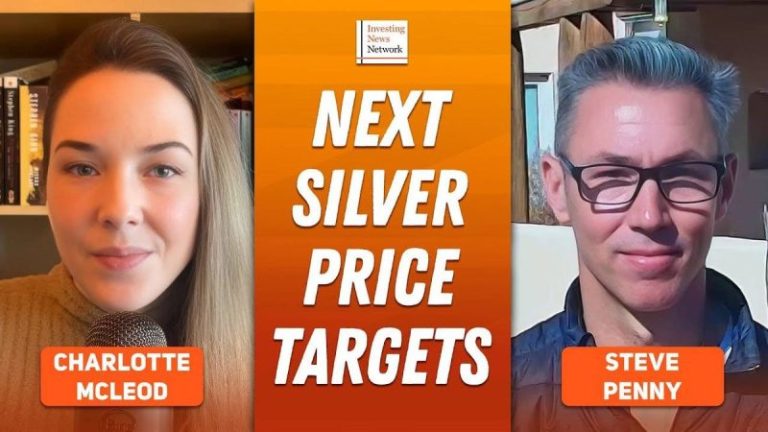
Steve Penny, founder of SilverChartist.com, shares his thoughts on silver’s price breakout and next move, as well as the gold, platinum, uranium and oil markets.

‘In 1979, silver went up 700 percent, 8X in 12 months. I think that moment still lies ahead,’ he said.

Securities Disclosure: I, Charlotte McLeod, hold no direct investment interest in any company mentioned in this article.

This post appeared first on investingnews.com

As Washington accelerates efforts to secure key supply chains, rare earths and critical minerals like gallium have emerged as strategic priorities for US industry and national security.

China has long used its dominance over strategic metals to apply pressure to the US, ramping up efforts in recent years.

Beijing first tightened export licenses on gallium and related materials in 2023, and then in December 2024 effectively banned exports of gallium, germanium and antimony — all critical to semiconductors, defense systems and advanced electronics — to the US by refusing licences in most cases under its dual-use export control regime.

The move was widely seen as retaliation for US export controls on Chinese high-tech goods, and underscored China’s leverage in critical minerals supply chains. The restrictions created shortages for American buyers and forced some to source materials indirectly through third countries to keep production lines moving.

In late 2025, however, China suspended its direct export ban on gallium and related metals to the US, part of a tentative trade truce following high-level talks between US President Donald Trump and Chinese President Xi Jinping.

The suspension, which runs through late 2026, restores the possibility of exports, but keeps the metals on China’s broader export control list, meaning shipments still require government licences.

Harvey Kaye, executive chairman of privately owned US Critical Materials, says the US’ vulnerability has become impossible to ignore after decades of Chinese dominance in rare earths mining and processing.

“They flooded the market, made it uneconomic for others and then locked up assets worldwide.”

Today, China controls roughly 98 percent of rare earths processing, a concentration the US government increasingly views as untenable. Its concerns intensified last year, when China restricted exports of gallium, a metal essential to advanced semiconductors, radar systems and military hardware.

“There are roughly 3,800 military uses for gallium alone,” Kaye said. “When China cut it off, the geopolitical reality became very real, very fast.” US Critical Materials believes it has a potential answer.

The company controls 339 claims at its Sheep Creek project in Montana, where recent sampling returned average total rare earths grades of around 9 percent — significantly higher than most North American peers. More critically, the deposit is rich in heavy rare earths and gallium, which are essential for magnets, chips and defense applications.

“What makes this deposit unique is not just the grade, but the heavies — dysprosium, terbium and gallium,” Kaye explained. “That puts us in a very different strategic position.”

The company is positioning itself as both a resource and technology play.

In partnership with Idaho National Laboratory, US Critical Materials has developed what it calls a closed-loop, environmentally benign processing method dubbed “rock-to-dock” technology.

“Our goal is to go from raw material to finished product without destroying the environment,” Kaye said. “No effluent, no waste — and critically, processing done in the US.”

He added that the company expects visibility to early production and revenue as soon as 2026, helped by underground mining methods that avoid large open pits and minimize surface disturbance.

Federal interest is already building. Kaye confirmed discussions with multiple US agencies, including the Department of Defense, and said the company is open to government investment and offtake agreements.

“Found in America, processed with American technology and available now — that changes everything,” he said.

Looking ahead, Kaye expects greater collaboration across the US rare earths sector as policymakers push for supply chain resilience. “At this stage, we’re all Americans,” he said. “Competition matters, but cooperation matters more.”

Geopolitics, trade friction and the push to rewire rare earths supply chains

Rising geopolitical tensions between China, the US and Europe are accelerating changes in global rare earths trade flows, with long-term implications for supply security as 2026 approaches.

“Whether rare earths are truly ‘critical’ for individual nations is almost beside the point,” the expert said. “We seem to have decided, politically, to weaken trade between major powers. If we’re going to do that with China, we need to be prepared for continued supply instability in rare earths.”

That instability leaves western economies with two broad options: rebuild China’s vertically integrated rare earths supply chain at home — at a higher cost — or reduce dependence on rare earths altogether via new technologies.

“Either we recreate the Chinese supply chain in miniature and accept higher prices, or we innovate our way out of the problem,” Hykawy said. “That question is still very much open.”

Technological change is already offering potential pathways. Hykawy pointed to advances in electric motor design, including axial flux motors developed by YASA, a subsidiary of Mercedes-Benz Group (ETR:MBG,OTCPL:MBGAF).

Unlike conventional cylindrical electric vehicle motors that rely heavily on rare earth permanent magnets, axial flux designs use magnets more efficiently and may, in some applications, replace them with electromagnets.

“These motors require better materials and more precise machining, but they use magnets far more efficiently,” he said. “In some cases, they may even eliminate the need for rare earth magnets altogether.”

The example highlights how innovation could soften demand growth for certain rare earths over time, though cost and scalability remain barriers. At the same time, Hykawy argued that western efforts to localize rare earths mining, processing and magnet manufacturing are realistic, but will take patience.

“We are only at the beginning of building a rare earth supply chain entirely outside of China,” he said. “There is absolutely nothing that prevents us from doing it except time and money.”

Contrary to popular belief, Hykawy said rare earths mining is not more environmentally damaging than other forms of mining, noting that deposits — including ionic clays rich in heavy rare earths — exist well beyond China’s borders.

“The real constraint is people,” he said. “We need experienced operators, engineers and processors, and there is no shortcut for the time it takes to build that expertise.”

As trade frictions persist, Hykawy expects supply diversification to continue, but warned that near-term volatility is likely to remain a defining feature of the rare earths market through 2026.

Securities Disclosure: I, Georgia Williams, hold no direct investment interest in any company mentioned in this article.

This post appeared first on investingnews.com

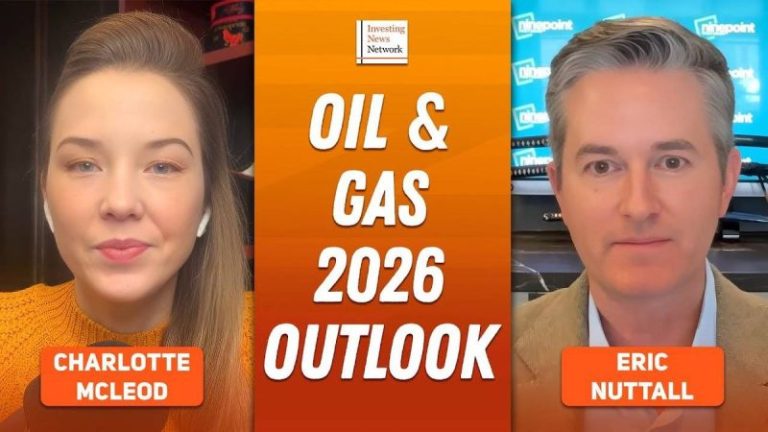
Eric Nuttall, partner and senior portfolio manager at Ninepoint Partners, shares his outlook for oil and natural gas in 2026, emphasizing that he remains bullish on both.

However, he’s looking at different timelines — he sees natural gas as a more immediate story, while oil is likely to pick up in the second half of the year.

Securities Disclosure: I, Charlotte McLeod, hold no direct investment interest in any company mentioned in this article.

This post appeared first on investingnews.com

Bayan Mining and Minerals Ltd (ASX: BMM; ‘BMM’ or ‘the Company’) is pleased to report significant high-grade rare earth element (REE) results from follow- up surface geochemical sampling at its 100% owned Desert Star Project, located in San Bernardino County, California, USA.

Highlights

  • Substantial Increase in Surface REE Grades: Follow-up surface sampling returned materially higher total rare earth oxide (TREO) grades than the reported in Phase 1 reconnaissance program. The stand out results up to:
Surface Samples

  • 66,810 ppm TREO (Sample 19583)
  • 6,220 ppm TREO (Sample 19593)
  • 5,458 ppm TREO (Sample 19594)
  • 4,979 ppm TREO (Sample 19544)
  • 4,551 ppm TREO (Sample 19569)
Heavy Minerals Concentrate Samples

  • 91,092 ppm TREO (Sample 19597)
  • 34,330 ppm TREO (Sample 19598)
  • 8,793 ppm TREO (Sample 19509)
  • 6,632 ppm TREO (Sample 19513)
  • 2,796 ppm TREO (Sample 19511)
  • Multi-Media Confirmation of Mineralisation: Elevated TREO across both surface and heavy mineral concentrate samples confirm a robust primary REE source with effective secondary dispersion into local drainage systems.
  • Favourable Geological Controls: Sampling targeted structurally controlled, oxidised pegmatitic and gneissic lithologies with carbonate veining, brecciation and Fe-oxide alteration, consistent with REE-hosting systems recognised within the Mountain Pass district.
  • High Priority Targets Defined: Integrated desktop and geophysical studies have already delineated four coherent high-priority REE targets, supported by geophysics and geochemical signatures consistent with carbonatite-hosted systems.
  • Approved Plan of Operation: The U.S. Bureau of Land Management (BLM) has approved the Plan of Operations (PoO) for the Desert Star Project, providing regulatory clearance to advance field activities and progress toward drilling.
  • Strong Phase 1 Results Provide Foundation: Initial reconnaissance sampling returned outstanding results, including: 7,841 ppm TREO (Sample ID 19415), 4,097 ppm TREO (Sample 19378), 3,443 ppm TREO (Sample 19411), 3,443 ppm TREO (Sample 19413), 2,986 ppm TREO (Sample 19366) and 2,828 ppm TREO (Sample 19355) at the Desert Star Project (see ASX Announcement dated 1 September 2025).
  • Strategic Location of Desert Star Projects:Bayan’s Desert Star Project is strategically located just 4.5 km northeast of MP Materials’ Mountain Pass REEMine1 one of the largestand highest-grade rare earth operations globally. Desert Star North Projectlies only 3 km north of the Dateline Resources’ Colosseum Gold Mine2.Both properties are located within the same regional corridor and sharestructural and geological characteristics with the globally significantMountain Pass REE Mine.

The Phase 2 surface sampling program was designed to infill and extend anomalous areas identified during the Phase 1 initial reconnaissance campaign and to test priority structural corridors defined from earlier surface sampling and geophysical datasets. The results demonstrate a clear increase in grade tenor relative to Phase 1 and further validated Desert Star as a prospective REE zones system located within one of the world’s premier rare earth district.

A total of 73 rock chip samples and 56 heavy mineral concentrate samples were collected during the phase 2 program. Assay results demonstrate a clear increase in grade tenor relative to Phase 1 results, with values returning up to 66,816 ppm TREO (6.6%) from rock chip samples and up to 91,101 ppm TREO (9.1%) from heavy mineral concentrate samples.

Click here for the full ASX Release

This post appeared first on investingnews.com

Canadian oil and gas stocks have faced a rollercoaster ride over the past few years.

However, analysts remain optimistic about the global oil sector. The top oil and gas stocks on the TSX and TSXV have been posting gains despite volatile market conditions, and many companies offer strong payouts for dividend investors.

Canadian energy stocks that pay dividends — a portion of corporate profits shared on a specific timeline — are attractive to those who prefer a long-term approach to wealth creation. Dividend investing allows for a steady flow of income and the opportunity to increase equity holdings.

Investors should look for stocks with high dividend yields, which is based on annual dividend income per share divided by price per share. For example, if a dividend stock has a share price of C$10.00 and pays a C$0.25 dividend every quarter, it has a dividend yield of 10 percent. Of course, as share prices fluctuate, so too will dividend yields, so investors should perform due diligence when choosing which company to invest in.

The ability to offer a dividend payment points to the financial health of a company, making it a point of pride for companies in the oil and gas industry.

1. InPlay Oil (TSX:IPO)

Dividend yield: 12.4 percent
Debt-to-equity ratio: 0.61
Market cap: C$343.25 million

InPlay Oil is an oil and natural gas company with operations concentrated in West Central Alberta, Canada.

In its financial and operating highlights for its Q3 period ending September 30, 2025, the company reported that its average production for the quarter was above expectations at 18,970 barrels of oil equivalent per day (boe/d), more than double its average output of 8,206 boe/d in the third quarter of the previous year.

InPlay will pay a monthly dividend of C$0.09 per share on January 30, 2026, to shareholders of record as of January 15.

2. Meren Energy (TSX:MER)

Dividend yield: 11.3 percent
Debt-to-equity ratio: 0.41
Market cap: C$1.21 billion

Meren Energy is an full-cycle exploration and production oil and gas company with offshore assets in Nigeria, Namibia, South Africa and Equatorial Guinea. This includes interests in producing and development assets in Nigeria operated by oil majors.

For the period ending September 30, 2025, Meren reported average daily working interest and entitlement production of 31,100 boe/d and 35,600 boe/d respectively, which the company said was in line with its expectations.

Meren Energy paid a quarterly dividend of US$0.0371 per share on December 9, 2025, to shareholders of record at the close of business on November 21, 2025.

3. Alvopetro Energy (TSXV:ALV)

Dividend yield: 8.63 percent
Debt-to-equity ratio: 0.08
Market cap: C$236.92 million

Alvopetro Energy is an oil and gas exploration and production company with assets in Brazil and Canada.

In its financial and operating highlights for the period ending September 30, 2025, the company reported average daily sales of 2,343 boe/d. Its sales were up 11 percent from Q3 2024 and down 4 percent from Q2 2025.

Alvopetro Energy paid a base quarterly dividend of US$0.10 per common share and a special dividend of US$0.02 per common share on January 15, 2026, to shareholders of record at the close of business on December 31, 2025.

4. Parex Resources (TSX:PXT)

Dividend yield: 8.63 percent
Debt-to-equity ratio: 0.01
Market cap: C$1.72 billion

Parex Resources is the largest independent oil and gas exploration and production company in Colombia.

For the period ending September 30, 2025, Parex reported average oil and natural gas production of 43,953 boe/d, up 3 percent compared to the prior quarter and down 7.6 percent year-over-year. Production rose further in October, averaging 49,300 boe/d, which the company said supports it reaching its full year 2025 average production guidance of 43,000 to 47,000 boe/d.

Parex paid a quarterly dividend of C$0.385 per share on December 15, 2025, to shareholders of record on December 8, 2025.

5. Cardinal Energy (TSX:CJ)

Dividend yield: 8.54 percent
Debt-to-equity ratio: 0.24
Market cap: C$1.36 billion

Last on this list of top Canadian oil and gas dividend stocks is Cardinal Energy is an oil-focused company with operations centered on low-decline light, medium and heavy oil in Alberta and Saskatchewan, Canada. It also produces liquid and conventional natural gas.

Cardinal reported that its Q3 2025 production totaled 20,772 boe/d, down 2 percent from the same quarter in the previous year as the company continued to focus its capital on completing the Reford thermal project. The project has since entered production.

Cardinal Energy will pay a monthly dividend of C$0.06 per share on February 17, 2026, to shareholders of record on January 30, 2026.

Securities Disclosure: I, Melissa Pistilli, hold no direct investment interest in any company mentioned in this article.

This post appeared first on investingnews.com