Rapid Critical Metals (RCM:AU) has announced Canada – High Grade Ga-Ge Sampling Confirms Historic Results
Download the PDF here.
This post appeared first on investingnews.com

Rapid Critical Metals (RCM:AU) has announced Canada – High Grade Ga-Ge Sampling Confirms Historic Results
Download the PDF here.

Willem Middelkoop, founder of Commodity Discovery Fund, breaks down his outlook for silver, saying that at this point US$200 or even US$300 per ounce is in the cards for the white metal.
‘We’re in the first innings I think of this short squeeze, so it’s not over yet,’ he said.
Securities Disclosure: I, Charlotte McLeod, hold no direct investment interest in any company mentioned in this article.
Don Durrett of GoldStockData.com explains why gold’s record-setting price run isn’t over.
‘The reason gold is at US$5,000 (per ounce) and going higher is because the US bond market is fragile and becoming more fragile every day,’ he said. ‘But not only that — I’ve said this — it’s going to fail, and that’s why gold keeps going higher and higher and higher.’
Securities Disclosure: I, Charlotte McLeod, hold no direct investment interest in any company mentioned in this article.

Homeland Nickel combines a consolidated portfolio of nine at-surface nickel laterite projects in Southern Oregon with a strategic portfolio of mining equities, offering investors leveraged exposure to domestic US nickel development alongside balance-sheet flexibility and reduced dilution risk.
Homeland Nickel (TSXV:SHL,OTC:SRCGF) is a Canadian mineral exploration company focused on critical metals, with a primary emphasis on nickel laterite projects in Southern Oregon, USA. Nickel has been designated a critical mineral by the US government, and Homeland Nickel is advancing assets in what it considers the only region in the United States with the geological scale and characteristics required to support a meaningful domestic nickel supply.
The company has assembled a portfolio of nine nickel laterite projects that were originally identified during exploration campaigns conducted from the 1950s through the 1970s. These deposits occur as at-surface laterite lenses formed by the weathering of ultramafic rocks, enabling the use of surface sampling and auger drilling to rapidly define mineral resources. This geological setting allows Homeland Nickel to advance multiple projects efficiently while managing exploration costs.
In parallel with asset consolidation and exploration, Homeland Nickel maintains a portfolio of mining equities in publicly traded companies. Management views this portfolio as a strategic asset that provides additional financial flexibility and potential non-dilutive funding options, supporting a disciplined capital allocation strategy as the company advances its nickel projects through resource definition and technical studies.
The Cleopatra project is Homeland Nickel’s flagship asset and hosts a historical mineral resource of 39.5 Mt grading 0.93 percent nickel. Mineralization occurs at surface and has historically only been explored to shallow depths (about 12 feet), leaving the deposit open at depth and along strike.
Location map of the Cleopatra Nickel property
Cleopatra is one of two projects optioned to Patriot Nickel under a staged earn-in agreement that includes cash payments, exploration expenditures and advancement to pre-feasibility. Homeland Nickel remains the operator during the exploration phase, retains a 20 percent interest in the Cleopatra project and receives a 20 percent equity interest in Patriot.
The Red Flat project is located approximately 12 kilometres inland from Gold Beach, Oregon, and hosts a historical resource of 18.8 Mt grading 0.84 percent nickel. Historical trenching and drilling indicate thick laterite horizons with consistent nickel grades.
Red Flat is accessible via gravel road.
The project has received a Surface Use Determination from the US Forest Service approving a proposed sonic drilling program, subject to a National Environmental Policy Act review. Homeland Nickel plans to update the historical resource and evaluate potential expansion through additional drilling and sampling.
The Eight Dollar Mountain project lies within the same ultramafic geological belt as Cleopatra and Red Flat. Surface sampling has returned nickel values of up to 2.2 percent nickel, highlighting the project’s high-grade potential. The property consists of 115 mining claims covering an area of 2,376 acres.
Eight Dollar Mountain is included in the option agreement with Patriot Nickel, with work planned to support an initial mineral resource estimate.
The Woodcock Mountain project covers more than 900 acres and has been identified by the United States Geological Survey as hosting significant nickel laterite mineralization. Historical work has reported grades up to 1.5 percent nickel over 15 feet and values as high as 2.13 percent nickel along a three-kilometre trend.
The project is located outside withdrawn land areas, and Homeland Nickel plans to advance surface sampling and auger drilling to define an initial mineral resource.
The Josephine Creek project, adjacent to Woodcock Mountain, was staked based on historic nickel laterite exposures. Sampling completed in 2025 returned an average grade of 0.73 percent nickel, with 10 of 82 samples grading 1 percent nickel or higher. The property consists of 174 lode mining claims covering an area of 1,455 acres.
Josephine Creek was sampled by the company in 2025 with 74 samples over 22 individual mining claims returning an average of 0.75 percent nickel with 10 samples grading over 1 percent nickel. The property benefits from proximity to infrastructure and further work is planned in 2026 to support an initial resource estimate.
The most recently acquired property, Rough and Ready, has seen extensive surface sampling, auger hole drilling and pit excavations to expose good grade nickel laterite over a wide area. Homeland Nickel will review the extensive data acquired with this project and will sample all claims for nickel during a summer 2026 exploration program.
Homeland Nickel has also staked nickel laterite claims at Iron Mountain, Peavine Mountain and Free & Easy, expanding its portfolio to a total of eight projects. These earlier-stage assets provide additional pipeline depth and optionality as the company advances its more mature projects.
In addition to its wholly owned exploration assets, Homeland Nickel holds a portfolio of publicly traded mining equities, including positions in Canada Nickel Company, Noble Mineral Exploration, Benton Resources, Vinland Lithium and Magna Terra Minerals. This portfolio provides financial flexibility and potential non-dilutive funding options, supporting the company’s exploration strategy while offering exposure to value creation beyond its own project pipeline.
Stephen Balch is an Ontario-registered geoscientist with over 40 years of experience in mineral exploration, including nearly three decades focused on nickel. His background spans nickel, copper and platinum-group element exploration across major mining jurisdictions, including experience with Inco Limited, FNX Mining, Noront and Voiseys Bay Nickel. He has more than 20 years of public company leadership experience as a CEO, president, technical consultant and director. In 2001, he joined Aeroquest Limited and helped develop the AeroTEM airborne geophysical system, and in 2019 co-founded Canada Nickel Company, where he currently serves as VP Exploration.
Ashley Nadon is a chartered professional accountant with a BA in Economics and an MBA. She provides consulting and accounting services to private and public companies as the managing director of a chartered professional accounting firm. Nadon brings experience as a CFO of several reporting issuers and currently serves as CFO for Kermode Resources.
Errol Farr is a seasoned financial professional with more than 35 years of experience in financial management, reporting, business optimization and strategy development. He previously served as CFO of Anaconda Mining, and currently holds senior executive roles including CFO, COO and corporate secretary of Zonetail, CFO of Big Tree Carbon and CFO/corporate secretary of AFR NuVenture Resources, a mining exploration company with US projects.
Vance White has over five decades of experience in guiding mineral exploration companies. He has served as president, CEO and director of Noble Mineral Exploration since 2003 and has held director and officer positions with multiple public companies in the mining sector.
Michael Dehn is a partner at Avanti Management and Consulting with more than 21 years in the mining industry. He has served as a director of publicly listed and private junior mining companies and is currently president and CEO of Temas Resources and United Lithium. He has been a director of the company’s predecessor since December 2020.
Birks Bovaird is chair of the board of Energy Fuels, a uranium and vanadium mining and development company, and serves as a director of Noble Mineral Exploration. His career has focused on corporate financial consulting and strategic planning, including serving as vice-president of corporate finance at a major Canadian accounting firm. He holds an ICD.D designation and is a graduate of the Canadian Director Education Program.
Main Street investors are grappling with emotionally driven investment decisions, which could pose a greater financial threat than the market downturn that Wall Street is predicting.
That’s according to an exclusive survey conducted by MarketWise.
“This kind of disconnect suggests investors are riding performance momentum and bracing for volatility. This type of setup often leads to sharper pullbacks when sentiment eventually turns.’
The study was conducted on December 11, 2025. The responses, gathered from 1,004 investors across various demographics, reveal heightened anxiety as recession fears linger.
This emotional undercurrent is manifesting starkly in portfolios, where safety trumps speculation.
The MarketWise survey shows that cash still dominates, with 86 percent of investors participating with an average US$626 monthly allocation. Fifty-five percent deem it the safest asset overall.
In stark contrast, crypto attracts just 35 percent participation at a meager US$92 monthly average.
“Crypto is no longer the ‘Wild West,’ but investor confidence hasn’t caught up to regulatory clarity. Fifty-four percent of investors say crypto is the asset class they’re most cautious about, and 56 percent see it as the most volatile despite reporting rules and oversight expanding,” said Royal.
Gold and commodities drew optimism from 44 percent overall, with that amount rising to 47 percent among Millennials. This sentiment aligns with the metal’s recent record surge past US$5,500 per ounce on safe-haven bids.
Stocks remain broad at 69 percent participation with an average monthly contribution of US$320; however, caution prevails for 46 percent of those surveyed, who said they feel “fearful” about stocks in 2026, mirroring 47 percent real estate wariness, despite a 23 percent holding.
Recession fears loom large, with three-quarters of respondents anticipating a 2026 downturn — yet 46 percent admit financial unreadiness. This number rises to 54 percent for those earning under US$75,000.
“Investor sentiment explains why panic-driven behavior persists, such as 18 percent of investors reporting that doomscrolling has already pushed them into a rushed investment decision,” Royal noted.
Forty-three percent of respondents predict emotional investing will harm their performance, while 45 percent have paused markets for mental health and 46 percent let economic and geopolitical headlines sway feelings.
“The mental tax of investing is becoming tough to ignore,” Royal added.
“Half of American investors check their portfolios at least once a day (with 9 percent doing so five or more times per day), and 51 percent feel investment stress at least monthly.”
This intensifies among youth. Sixty-one percent of Gen Z report acute investment stress, and 36 percent feel it daily or weekly, far above the average. Fear of missing out, or ‘FOMO,’ drives 17 percent of Gen Z decisions, with 42 percent overall somewhat or often impacted, highlighting impulsive trends among youth.
Meanwhile, 36 percent of Gen Z plan safety shifts versus 29 percent broadly. Millennials show parallel vulnerabilities: 21 percent admit doomscrolling panic, and 11 percent check portfolios frequently.
“Even solid fundamentals can get drowned out by headlines when investors are this emotionally fatigued. Of course, that’s when discipline matters most,” explained Royal.
Coping strategies lean toward rationality: 34 percent remind themselves markets move in cycles, and 20 percent research more to regain control. Older generations appear to show more restraint. Baby Boomers and Gen X report lower stress, with 49 percent overall “rarely” or “never” stressed versus Gen Z’s 61 percent. This generational divide — youth FOMO versus elder discipline — underscores the emotional paralysis among younger investors.
Market behavior mirrors this anxiety: 2025 Google searches for “stock market crash” hit 1.72 million, far outpacing “bull market” searches at 262,000. “Crypto crash” drew 392,000 hits, reinforcing the survey’s fear-driven sentiment.
As the gold price hits record highs and the cryptocurrency sector lags, MarketWise’s survey proves the real 2026 battle isn’t markets — it’s mastering the emotions driving them.
Securities Disclosure: I, Meagen Seatter, hold no direct investment interest in any company mentioned in this article.

Homeland Nickel (TSXV:SHL,OTC: SRCGF) is a Canada-based mineral exploration company targeting critical metals, with a strategic focus on nickel laterite projects in southern Oregon, USA. Recognized as a critical mineral by the US government, nickel underpins Homeland Nickel’s strategy as the company advances assets in what it views as the only US region with the scale and geology capable of supporting a significant domestic nickel supply.
The company has built a portfolio of nine nickel laterite projects originally identified during exploration programs carried out between the 1950s and 1970s. The deposits occur as near-surface laterite lenses formed through the weathering of ultramafic rocks, allowing for efficient surface sampling and auger drilling to quickly delineate mineral resources. This geological setting enables Homeland Nickel to advance multiple projects in parallel while maintaining a cost-effective exploration approach.
Alongside project consolidation and exploration, Homeland Nickel also holds a portfolio of mining equities in publicly listed companies. Management considers this portfolio a strategic asset that enhances financial flexibility and offers potential non-dilutive funding opportunities, supporting a disciplined capital allocation strategy as the company progresses its nickel assets through resource definition and technical evaluation.
This Homeland Nickel profile is part of a paid investor education campaign.*
Click here to connect with Homeland Nickel (TSXV:SHL) to receive an Investor Presentation

Amazon said Wednesday it was slashing another 16,000 jobs across the company in an ongoing bid to restructure the sprawling trillion-dollar firm.
‘The reductions we are making today will impact approximately 16,000 roles across Amazon, and we’re again working hard to support everyone whose role is impacted,’ Beth Galetti, Amazon’s senior vice president of people experience and technology, said in a memo to employees.
‘That starts with offering most US-based employees 90 days to look for a new role internally,’ she said. Amazon will ‘continue hiring and investing in strategic areas and functions that are critical to our future.’
Galetti said the cuts would ‘strengthen our organization by reducing layers, increasing ownership, and removing bureaucracy.’
In October, Amazon cut 14,000 jobs primarily at the corporate level. At the time, Galetti cited artificial intelligence as being the “most transformative technology we’ve seen since the internet.”
Amazon has 1.55 million employees worldwide, the company said in a filing last year.
It said Tuesday that it would close some of its Amazon Go and Amazon Fresh physical stores, planning to convert some into Whole Foods Market stores.
While AI was not explicitly cited in Wednesday’s note to Amazon workers, the cuts come as workers nationwide brace for the impact of artificial intelligence in a sluggish labor market.
Companies have started citing ‘efficiency’ as they pursue the implementation of AI.
On Monday, Goldman Sachs CEO David Solomon said that his firm’s headcount would be ‘more constrained in 2026’ as the company sees ‘opportunities for efficiency and we try to deploy those.’
On Tuesday, Pinterest said it would cut 15% of its workforce as it pivoted ‘resources to AI-focused roles and teams that drive AI adoption and execution.’
Last year, Microsoft said it was eliminating 9,000 jobs to improve efficiency. Target also cut 1,800 corporate jobs to reduce ‘complexity.’ Instagram and Facebook owner Meta Platforms also reduced its workforce by around 600 jobs as it shifted toward artificial intelligence.
At the same time, hiring nationwide is slowing and inflation remains elevated.
After three months of contraction last year, the U.S. economy added only 56,000 jobs in November and just 50,000 in December. Meanwhile, inflation remains at 2.7%, well above the Federal Reserve’s target of 2%.
South Harz Potash Limited (SHP:AU) has announced Swedish Exploration Licence Approvals
Download the PDF here.
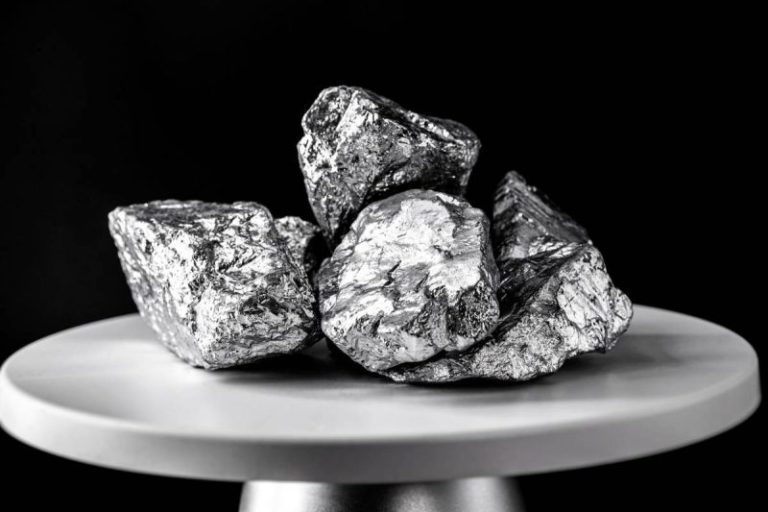
Platinum may be rare, but it is the third most-traded precious metal in the world, behind gold and silver.
The world’s platinum demand varies widely across many sectors. Most notably, platinum metal is used in autocatalysts and jewelry, as well as for medical and industrial purposes. Those interested in investing in platinum would do well to be aware of the many platinum uses. After all, by knowing which industries require platinum, it’s possible to understand supply and demand dynamics, and to be aware of how the precious metal’s price may move in the future.
With that in mind, here’s a list of the four main platinum uses. Scroll on to learn more about platinum’s key applications.
One of the main platinum uses is in the construction of autocatalysts. An autocatalyst is a “cylinder of circular or elliptical cross section made from ceramic or metal formed into a fine honeycomb and coated with a solution of chemicals and platinum group metals.” An autocatalyst mounted inside a stainless steel canister is known as a catalytic converter.
Catalytic converters are installed in a vehicle’s exhaust lines, between the engine and muffler, where they are used to moderate the dangerous qualities of exhaust. Specifically, the autocatalysts that vehicles contain convert over 90 percent of hydrocarbons and carbon monoxide into carbon dioxide, nitrogen and water vapor. They can also convert pollutants from diesel exhaust into carbon dioxide and water vapor, which is immensely helpful in reducing pollution.
Autocatalysts have been used in the US and Japan since 1974, and are now so common that over 95 percent of new vehicles sold each year have one. As a result, they are a significant source of platinum demand that is not likely to disappear in the future. Indeed, as pollution rules become more stringent, car companies are looking at creating even more efficient autocatalysts.
According to data from the World Platinum Investment Council (WPIC), automotive demand is forecasted to fall 3 percent to 3.02 million ounces in 2025 before falling another 3 percent to 2.92 million ounces in 2026.
Platinum has many qualities that make it ideal for use in jewelry, and that is the second largest source of platinum demand. The metal is strong, resists tarnish and can repeatedly be heated and cooled without hardening or oxidizing.
When used to make jewelry, platinum is commonly alloyed with other platinum-group metals such as palladium, as well as copper and cobalt, so that it is easier to work with.
The history of platinum jewelry is long. More than 2,000 years ago, Indigenous people in South America made rings and ornaments out of platinum. Egyptians used platinum for decoration as early as the 7th century BCE. Meanwhile, Europeans began to use the metal in jewelry in the 18th century. Currently, China is the largest market for platinum jewelry.
The WPIC expected platinum demand for jewelry was expected to increase 7 percent year-over-year to 2.16 million ounces in 2025, then decline 6 percent in 2026 to 2.04 million ounces.
Platinum’s industrial applications could fill a book all on their own. For instance, platinum catalysts are used to manufacture fertilizer ingredients, and the metal is a key component in silicones, hard disks, electronics, dental restoration, glass-manufacturing equipment and sensors in home safety devices.
Another platinum use is in the construction of hard drives with extremely high storage densities. And, because it is reactive to oxygen, oxides of nitrogen and carbon monoxide, platinum can be used to detect changes in the amount of those materials in vehicles and buildings. For the same reason, platinum is also used in medical sensors, particularly medical instruments that measure blood gases, to detect oxygen.
Among growing segments is platinum’s use as a catalyst in the production of green hydrogen. Similar to how the metal is used to convert automotive pollutants, it can also be used as an electrolyzer to convert water into hydrogen and oxygen, with the resulting hydrogen usable in emission-free fuel cell vehicles. In 2025, demand from hydrogen production is predicted to grow by 20 percent to 50 million ounces, then increasing another 36 percent in 2026 to 58,000 ounces.
Overall, WPIC forecast that industrial demand for platinum, including medical demand, would fall 22 percent to 1.9 million ounces in 2025 before growing 9 percent to 2.08 million ounces in 2026.
Platinum is used in electronic medical devices like those mentioned above, as well as in catheters, stents and neuromodulation devices. It is ideal for these applications because of its durability, conductivity and biocompatibility. The metal is also inert within the body, making it safe for implantation.
To meet other medical needs, platinum can be formed into rods, wires, ribbons, sheets and micromachined parts. Further, it helps fight cancer in the drugs cisplatin and carboplatin, which are widely used to treat testicular cancer, as well as ovarian, breast and lung cancer tumors.
Medical demand for platinum has increased in recent years, and is forecast to rise 4 percent to 320,000 ounces in 2025 and another 4 percent to 322,000 ounces in 2026.
In 2026, the price of platinum has spiked significantly as part of a precious metals bull market trading as high as US$2,900. In 2025, the PGM ranged between US$960 and US$1,900 per ounce.
Although the industry is facing a growing supply deficit, it is also dealing with lagging demand. The shortfall in supply is related to a hangover from COVID-19 lockdowns, Russia’s war in Ukraine and ongoing electricity shortages and railway issues in the top platinum producing country South Africa. Russia typically ranks as the world’s second largest platinum-producing country.
Meanwhile, economic pressures worldwide have weighed on demand for platinum from the automotive industry. However, the same economic challenges have led to less demand for electric vehicles, which don’t require platinum-laden catalytic converters.
Platinum in general has historically traded on par or at a premium to gold, but since 2015 the two metals have diverged in price, with gold taking the high road. This split has been attributed to gold’s safe-haven status and platinum’s reliance on the industrial and jewelry markets, which don’t fare well in times of economic uncertainty.
This has led to increasing demand for platinum jewelry as a cheaper alternative to gold jewelry.
Although platinum is 30 times rarer than gold, much harder to mine and in high demand due to its important industrial uses, precious metal gold has long been valued as a form of currency and a store of wealth. The gold price is almost double the price of platinum in 2026.
Both gold and platinum have wealth-generating potential, but it’s important to determine which precious metals fit your investment strategy; consider looking at supply, demand and prices for each option before making a decision.
To learn more, check out our article What is the Best Precious Metal to Invest In?
Securities Disclosure: I, Melissa Pistilli, hold no direct investment interest in any company mentioned in this article.

Gold and silver’s historic price rises are raising questions about the broader state of the world.
For Mark Moss, the surges reflect a deeper breakdown of trust in sovereign currencies.
“The real driver is not inflation,” the investor and commentator emphasized during a fireside chat at the recent Vancouver Resource Investment Conference. “The real driver is trust.”
Many investors remain focused on short-term price signals and conventional indicators, such as real interest rates, while overlooking deeper forces shaping capital allocation. According to Moss, the current state of the market favors long-term allocation. In his view, conviction — not timing — should guide investment decisions.
“You can’t borrow someone else’s conviction,” he said. “You have to start to learn to build your own thesis, and then you have to learn to look to find things that either confirm that thesis or deny that thesis.”
Precious metals are continuing a powerful price rally that began last year.
The gold price broke above US$5,500 per ounce for the first time on Wednesday (January 28), while silver broke through the triple-digit level last week and has continued rising, passing US$119 per ounce.
These moves are happening amid escalating geopolitical and policy uncertainty. However, Moss cautioned against focusing on shorter-term gold and silver price drivers, instead pointing to what he described as a fundamental dilemma facing governments with rising debt burdens — a dynamic he said is reshaping global capital flows.
Referencing comments by hedge fund founder Ray Dalio at the World Economic Forum in Davos, Switzerland, Moss described a “rock and a hard place” scenario. Governments face a choice between allowing debt crises that risk defaults and asset collapses, or continuing to expand money supply in ways that erode purchasing power.
“Either they have option one, the rock, which is a sovereign debt crisis, asset prices plunging — that’s what everybody’s kind of thinking. The markets are going to crash. My home values, my retirement value is going to crash. But the problem with that is they lose everything. They get wiped out, they have massive civil unrest,’ he said.
“And then the hard place is they can print the money. And so of course, they’ll always choose to bring the money.’
As a result, large institutional and sovereign investors face losses whether governments default or inflate, prompting a reassessment of traditional reserve assets. Moss said gold has emerged as one response to that reassessment, alongside broader interest in commodities and critical minerals. He further pointed to continued central bank gold buying as a signal that confidence in fiat currencies and the post-war financial order is weakening.
According to the World Gold Council, central banks have been purchasing gold at record levels in recent years.
Moss cited Poland as a notable example, describing it as a close US ally that has nonetheless been accumulating gold aggressively. Other large entities are following the same strategy — Tether, the world’s largest stablecoin issuer, recently revealed that part of its long-term plan is the stockpiling of gold in a Swiss bunker.
Gold’s rally is built on a strong multi-year advance. After starting 2025 at around US$2,640, the price had climbed to roughly US$3,200 by April before trading in a narrow range through the summer.
Momentum returned in late August, carrying gold above US$4,300 by mid-October. While the price briefly dipped below US$4,000 during a subsequent pullback, the retracement proved shallower and shorter than many market watchers expected. Gold resumed its ascent in mid-November and accelerated sharply toward the end of 2025.
Right now, the status quo is in favor of precious metals.
Regardless, Moss returned to the importance of taking a long-term perspective, stating that investors who fixate on short-term price moves risk missing the broader shift underway as trust dynamics change across the global economy.
“If you’re trying to understand why the price of gold dipped from US$5,000 and now it’s US$4,800, I can’t really help you with that,” Moss said. “But we understand the direction that’s at hand.”
Securities Disclosure: I, Giann Liguid, hold no direct investment interest in any company mentioned in this article.