Author

admin

Browsing

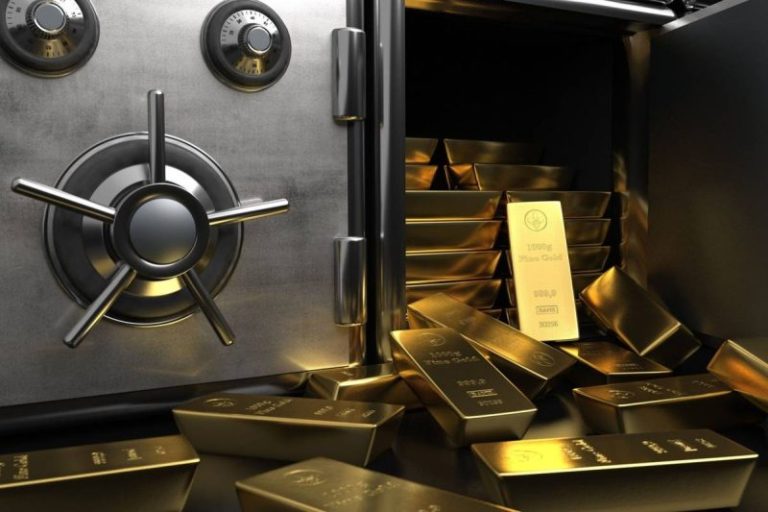
Global central banks own about 17 percent of all the gold ever mined, with reserves topping 36,520.7 metric tons (MT) at the end of November 2025. They acquired the vast majority after becoming net buyers of the metal in 2010.

Central banks purchase gold for a number of reasons: to mitigate risk, to hedge against inflation and to promote economic stability. Increased concerns over another global financial crisis have as expected led central banks once again to build up their gold reserves.

In a mid-2025 survey, the World Gold Council (WGC) said that 95 percent of the central bankers it polled expect global gold reserves to increase over the next 12 months. The precious metal’s ‘performance during times of crisis’ was cited by 85 percent of respondents as highly or somewhat relevant to their decision, while 80 percent cited its long-term store of value.

Central banks added 863.3 metric tons of gold to their vaults in 2025. While this was lower than the previous three years, which all topped 1,000 MT each, the reserve gains were still well above the 2010 to 2021 annual average of 473 MT.

Yearly central bank gold purchases since 2019.

Chart via the WGC.

A record 95 percent of respondents to the WGC survey stated their belief that central banks will continue to grow their holdings, with 5 percent suggesting they would hold at current levels. For the second year in a row, no respondents expected reserves to decrease.

The Council found that sentiment was consistent across advanced and emerging economies and reflected the strategic role of gold amid dynamic economic and geopolitical uncertainty.

Which central banks hold the most gold?

Read on to find out the 10 top countries by central bank gold holdings, as per data from the WGC, including recent Q4 2024 and full-year 2024 reports.

1. United States

Gold reserves: 8,133.46 metric tons

When it comes to the largest gold depository in the world, the American central bank is number one with 8,133.46 metric tons of gold.

A large percentage of US gold is held in “deep storage” in Denver, Fort Knox and West Point. As the US Treasury explains, deep storage is “that portion of the US Government-owned gold bullion reserve which the Mint secures in sealed vaults that are examined annually by the Treasury Department’s Office of the Inspector General and consists primarily of gold bars.”

The rest of US-owned reserves are held as working stock, which the country’s mint uses as raw material to mint congressionally authorized coins.

2. Germany

Gold reserves: 3,350.3 metric tons

The Bundesbank, Germany’s central bank, currently owns 3,351.53 metric tons of gold. Like many of the central banks on this list, the German national bank stores a significant portion of its gold in foreign central banks.

Today, just over half of Germany’s gold holdings are stored within Frankfurt, while internationally 1,236 MT of gold is stored in the vaults of the New York Federal Reserve, and 12 percent of its holdings are in London.

The Bundesbank’s foreign gold reserves came into question in 2012, when the German Federal Court of Auditors, the Bundesrechnungshof, was openly critical of the Bundesbank’s gold auditing. The German bank issued a public statement defending the security of foreign banks. Privately, the Bundesbank then began the arduous process of repatriating some of its gold stock back to German soil. By 2016, more than 583 MT of gold had been transferred back to Germany.

The economic upheaval and geopolitical volatility brought about by US President Donald Trump’s tariff wars and adversarial posturing toward Europe has led to calls for Germany to consider further repatriating its gold, reported The Guardian in January 2026.

3. Italy

Gold reserves: 2,451.9 metric tons

Banca d’Italia, the national bank of Italy, holds 2,451.84 metric tons of gold. The central bank began amassing its gold in 1893, when three separate financial institutions merged into one. From there, its 78 MT of holdings slowly grew into the large gold reserves it holds today.

Like Germany, Italy stores parts of its reserves offshore. In total, 141.2 MT are located in the UK, 149.3 MT are in Switzerland and 1,061 MT are kept in the US Federal Reserve. Italy houses 1,100 MT of gold domestically.

4. France

Gold reserves: 2,437 metric tons

The Banque de France has 2,437 metric tons of gold reserves, all of which it keeps on hand. The precious metal is stored in the bank’s secure underground vault, dubbed La Souterraine, which is located 27 meters below street level.

La Souterraine’s gold vaults are one of the four designated gold depositories of the International Monetary Fund.

According to Investopedia, the collapse of the Bretton Woods gold standard system was in part due to former French President Charles de Gaulle, who “called the U.S. bluff and began actually trading dollars in for gold from the Fort Knox reserves.” At the time, US President Richard Nixon “was forced to take the U.S. off the gold standard, ending the dollar’s automatic convertibility into gold.”

5. Russia

Gold reserves: 2,326.5 metric tons

The Bank of Russia is the official central bank of the Russian Federation and owns 2,332.74 metric tons of gold. Like France, Russia’s central bank has opted to store all its physical gold domestically. The Bank of Russia stores two-thirds of its gold reserves in a bank building in Moscow, and the remaining one-third in Saint Petersburg.

The majority of the yellow metal is in the form of large, variable-weight standard gold bars weighing between 10 and 14 kilograms. There are also smaller bars on site weighing as much as 1 kilogram each.

Russia, which is the second largest gold producer by country, has been a steady purchaser of the precious metal since roughly 2007, with sales ramping up significantly between 2015 and 2020. However, Russia’s refineries were banned from selling gold bullion into the London market following the country’s invasion of Ukraine. Sanctions by the west also include a freeze on about half of Russia’s gold reserves.

In early 2022, Russia tied its currency, the ruble, to the yellow metal. ‘The plan was to shift the currency away from a pegged value and into the gold standard itself so the ruble would become a credible gold substitute at a fixed rate,’ according to Robert Huish, an Associate Professor in International Development Studies at Dalhousie University.

6. China

Gold reserves: 2,306.3 metric tons

The central bank for Mainland China is the People’s Bank of China (PBoC), located in Beijing. According to the WGC, the national financial institute stores 2,279.56 metric tons of gold, most which has been purchased since 2000. In 2001, the PBoC had 400 MT of gold in reserve, but in just a little more than two decades that total has climbed by 459 percent.

The PBoC issues the Panda gold coin, which was first created in 1982. The Panda coin is now one of the top five bullion coins issued by a central bank. It is among the ranks of the American Eagle, Canadian Maple Leaf, South African Krugerrand and Australian Gold Nugget.

The PBoC was one of the top gold buyers of the world’s central banks for 2024 and 2025, purchasing 44 MT and 27 MT of gold during the years respectively. April 2024 marked the 18th consecutive month of gold buying for China’s central bank, which paused its purchases afterward until picking them up again in November. As of January 2026, it has purchased gold for a further 15 consecutive months.

7. Switzerland

Gold reserves: 1,039.9 metric tons

The Swiss National Bank (SNB) holds the seventh largest central bank gold reserves. Its 1,039.94 metric tons of gold are owned by the state of Switzerland, but the central bank manages and maintains the reserve. The Swiss constitution allows the SNB to buy and sell gold with market trends, but it is not required to report the sales.

After years of opaqueness regarding the country’s golden treasure trove and increased selling in 2011 as prices rose, the Swiss Gold Initiative was launched in 2011.

The initiative called for an amendment to the constitution to add three new points to it. The first was a mandate for all reserve gold to be held physically in Switzerland. The other two dealt with the central bank’s ability to sell its gold reserves, along with a decree that 20 percent of the Swiss bank’s assets be held in gold.

This culminated in a national referendum in 2014 that failed to reach a majority of votes. However, the public conversation did prompt the bank to be more transparent.

According to a 2013 release, the central bank reported that 70 percent of its gold reserve was held domestically, 20 percent was located at the Bank of England and 10 percent was stored with the Bank of Canada.

8. India

Gold reserves: 880.2 metric tons

The Reserve Bank of India is another central bank that has fervently acted to increase its holdings in recent years. It began adding to its gold assets in 2017; however, the majority of its purchases have taken place in the past four years.

Strikingly, after India’s central bank purchased 16 MT of gold in 2023, the institution scooped up another 72 MT of the precious metal in 2024. However, its 2025 purchases totaled just 4 MT, its lowest in eight years.

While more than half of its gold is held overseas in safe custody with the Bank of England and the Bank of International Settlements, about a third of its gold is held domestically. In June 2024, India repatriated 100 MT of gold from the United Kingdom. This was the first time since 1991 that the Reserve Bank of India moved its overseas gold holdings back home.

9. Japan

Gold reserves: 846 metric tons

The Bank of Japan currently holds 846 metric tons of gold. Public information about the Bank of Japan’s gold reserves is hard to come by.

In 2000, the island nation was holding approximately 753 MT of the yellow metal, and by 2004, the Bank of Japan’s gold store had grown to 765.2 MT. Its gold reserves remained at that level until March 2021, when the country purchased 80.76 MT of gold, bringing it to its current total.

10. Turkey

Gold reserves: 613.7 metric tons

The Central Bank of Turkey holds 613.7 metric tons of gold. Turkey has been a consistent gold buyer over the past several years, with its central bank adding 75 MT to its holdings in 2024. While the pace of the country’s buying slowed in 2025, the country accumulated another 27 metric tons through the end of November, making it the year’s fifth-largest gold buyer.

*11. International Monetary Fund

Gold reserves: 2,814 metric tons

The gold reserve held by the International Monetary Fund is the third largest in terms of size at 2,814 metric tons. The large gold reserve was amassed primarily during the founding of the international organization in 1944.

In that inaugural year, it was decided that “25 percent of initial quota subscriptions and subsequent quota increases were to be paid in gold.”

Since 1944, the International Monetary Fund has added gold through the repayment of debts owed by member countries. Nations can also exchange gold for another member country’s currency.

Securities Disclosure: I, Melissa Pistilli, hold no direct investment interest in any company mentioned in this article.

Securities Disclosure: I, Dean Belder, hold no direct investment interest in any company mentioned in this article.

This post appeared first on investingnews.com

Silverco Mining (TSXV:SICO) is a production-stage silver company targeting opportunities in Mexico’s Sierra Madre Occidental belt. Its primary technical focus is optimizing the wholly owned Cusi Mining Complex in Chihuahua, an 11,665-hectare district-scale property. The site benefits from established, institutional-quality infrastructure—such as direct access to the national power grid and paved roads—significantly lowering the capital requirements for restarting operations.

The company is undertaking a definitive transition toward mid-tier producer status through a binding agreement to acquire Nuevo Silver. This deal gives Silverco control of the La Negra mine in Querétaro, a currently producing asset that delivers immediate top-line revenue. By pairing the near-term restart of the Cusi 1,200 tpd mill with ongoing production at La Negra, Silverco is effectively bypassing the multi-year development cycle typically faced by junior miners.

This “buy-and-build” strategy is driven by a technical team with specialized expertise in Mexican epithermal vein systems and complex underground mine engineering, positioning the company to accelerate growth while maintaining operational discipline.

Company Highlights

  • The $62.5 million upsized bought deal financing (closing Q1 2026) and Eric Sprott’s $10 million lead order provide cornerstone validation from a legendary mining investor and the necessary liquidity to fast-track production restarts.
  • The updated Mineral Resource Estimate of 41.2 million ounces of silver equivalent (AgEq) in the Measured and Indicated category establishes a high-confidence geological foundation at Cusi, supporting long-term mine planning.
  • The dual-track growth strategy involving the Cusi restart and the Nuevo Silver/La Negra acquisition provides immediate production scale and a diversified cash-flow profile across two distinct Mexican mining jurisdictions.
  • Pure-play silver exposure with significant de-risking is achieved via the 1,200 tonne-per-day (tpd) Cusi mill, which was producing as recently as 2023, ensuring that surface infrastructure is ‘warm’ and capable of a rapid return to service.
  • Imminent exploration catalysts exist following the completion of a 15,000-metre drill program at Cusi; results are currently pending and are expected to define high-grade extensions at the San Miguel vein.

This Silverco Mining profile is part of a paid investor education campaign.*

Click here to connect with Silverco Mining (TSXV:SICO) to receive an Investor Presentation

This post appeared first on investingnews.com

Surface Metals Inc. (CSE: SUR,OTC:SURMF) (OTCQB: SURMF) (the ‘Company’, or ‘Surface Metals’) is pleased to announce it has engaged Danayi Capital Corp. (‘Danayi’), a full service marketing firm based out of Vancouver, BC, to provide digital marketing services for a 6-month term commencing on February 16, 2026. Under the terms of the agreement between Surface Metals and Danayi, the Company has agreed to pay Danayi one hundred and fifty thousand USD. No compensation in securities of the Company will be paid to Danayi. Danayi Capital Corp., an arm’s length party, is owned by Mehran Bagherzadeh. Based at 550 – 800 West Pender Street, Vancouver, BC, V6C 2V6 (e-mail: mehran@danayi.co; tel: 604-767-2983), Danayi specializes in marketing, advertising and public awareness within the mining and metals sector. To the knowledge of the Company, Danayi does not own any securities of the Company.

About Surface Metals Inc.

Surface Metals Inc. (CSE: SUR,OTC:SURMF) (OTCQB: SURMF) is a North American mineral exploration company focused on advancing a diversified portfolio of gold and lithium projects in Nevada, USA. The Company’s Cimarron Gold Project is located in Nye County, Nevada, in a historically productive gold district. Surface’s Clayton Valley Lithium Brine Project hosts an inferred resource of approximately 302,900 tonnes LCE adjacent to Albemarle’s Silver Peak Mine. Surface Metals is also advancing a sedimentary claystone lithium project in Fish Lake Valley, Nevada.

For more information, please visit: www.surfacemetals.com

On behalf of the Board of Directors
Steve Hanson
Chief Executive Officer, President, and Director
Telephone: (604) 564-9045
info@surfacemetals.com

Neither the CSE nor its regulations service providers accept responsibility for the adequacy or accuracy of this news release. This news release contains certain statements which may constitute forward-looking information within the meaning of applicable securities laws (‘forward-looking statements’). These include statements regarding the amount of funds to be raised under the Offering, and the use of such funds. There is no guarantee the Offering will be completed on the terms outlined above, or at all. Use of funds is subject to the discretion of the Company’s board of directors, and as such may be used for purposes other than as set out above. Any forward-looking statement speaks only as of the date it is made and, except as may be required by applicable securities laws, the Company disclaims any intent or obligation to update any forward-looking statement, whether as a result of new information, future events or results or otherwise.

To view the source version of this press release, please visit https://www.newsfilecorp.com/release/283975

News Provided by TMX Newsfile via QuoteMedia

This post appeared first on investingnews.com

Over the past year, the spot price of silver has surged past a 40 year record and into triple-digit territory, reaching a high of US$121 per ounce this past January.

For silver investors who bought into the physical market when the price was low, this first leg of the silver bull market has provided an opportunity to take ample profits.

At the Vancouver Resource Investment Conference, Rick Rule, proprietor at Rule Investment Media, shared his strategy for leveraging profits made in the physical silver market.

“That’s how I save. I maintain liquidity in US currency and I save in gold,” he said.

What did Rule do with the remaining half of his gains from selling physical silver?

He deposited those profits into high-quality silver-mining stocks.

“My reasoning being as follows: If silver goes nowhere for a year, if it stays rangebound, the best silver producers are discounting US$45 silver a year from now. If the price is at US$75 or US$80 they’ll be discounting US$75 or US$80 silver, which means the stock will be up 50, 60, 70 percent,” said Rule.

“The speculative outlook for the silver stocks seemed to be better than the speculative outcome for silver. If silver stays flat for a year, by definition silver won’t give me any return. But if it stays flat, the silver stocks would give me 50 or 60 percent. So it was a better speculative outcome,’ he added.

Here’s a look at the five silver stocks Rule invested in after selling his physical silver. Market cap figures were accurate as of February 12, 2026.

1. Wheaton Precious Metals (TSX:WPM,NYSE:WPM)

TSX market cap: C$88.43 billion
NYSE market cap: US$64.53 billion

Wheaton Precious Metals is the world’s biggest precious metals streaming company.

Its business model involves making upfront payments to precious metals companies in order to gain the right to purchase all or a portion of their metal production at a low, fixed cost. Investors benefit from gaining exposure to a wide range of precious metals companies operating in politically stable jurisdictions, while reducing the risk associated with investing in individual mining stocks. The company pays a quarterly dividend.

Wheaton currently has streaming agreements in place for 23 operating mines and 25 development-stage projects across five continents. This includes investments in Newmont’s (NYSE:NEM,ASX:NEM) Peñasquito mine in Mexico, Sibanye Stillwater’s (NYSE:SBSW) Stillwater and East Boulder mines in Montana, US, and Glencore’s (LSE:GLEN,OTCPL:GLCNF) Antamina silver mine in Peru.

2. Pan American Silver (TSX:PAAS,NASDAQ:PAAS)

TSX market cap: C$33.3 billion
NASDAQ market cap: US$23.67 billion

Pan American Silver holds interest in five silver-producing mines located in four Latin American countries.

This includes its three wholly owned mines: Huaron in Peru, Cerro Moro in Argentina and La Colorada in Mexico — its largest silver-producing asset. The company also holds a 95 percent interest in the San Vicente mine in Bolivia and a 44 percent stake in the Juanicipio mine in Mexico, operated by Fresnillo (LSE:FRES,OTCPL:FNLPF). Pan American’s gold-producing segment includes its second largest silver mine by production, the El Peñon gold-silver mine in Chile.

Ranked among the world’s largest primary silver producers, Pan American’s 2025 silver production total came in at 22.8 million ounces, alongside 742,200 ounces of gold. It’s set its silver production guidance for 2026 to between 25 million and 27 million ounces, white its expected gold production for the year is 700,000 to 750,000 ounces.

3. Industrias Penoles (OTCPL:IPOAF)

OTC market cap: US$26.14 billion

Founded in 1887, Mexico-based Industrias Peñoles is a vertically integrated metals company and a global leader in refined silver production. The company holds a majority stake in Fresnillo, the world’s leading primary silver producer.

Industrias Peñoles is also a top producer of refined gold and lead in Latin America, and one of the world’s leading producers of refined zinc and sodium sulfate. Its mining portfolio includes the Sabinas mine in Zacatecas, the Tizapa mine in Zacazonapan and the Velardeña mine in Durango. In the first half of 2025, Industrias Peñoles’ overall silver production from its mining operations came in at 30.3 million ounces of the metal.

4. AbraSilver Resource (TSXV:ABRA,OTCQX:ABBRF)

TSXV market cap: C$2.15 billion
OTC market cap: US$1.57 billion

Canadian junior Abrasilver Resource’s wholly owned flagship asset is the advanced-stage Diablillos silver-gold project in Salta, Argentina. It hosts five significant deposits: Oculto, JAC, Fantasma, Laderas and Sombra.

In December 2024, the company published an updated prefeasibility study for Diablillos, outlining a net present value (NPV) of US$747 million after tax at a 5 percent discount, as well as a 27.6 percent internal rate of return (IRR) and a two year payback period. An updated mineral resource estimate from July 2025 totals approximately 199 million ounces of silver and 1.72 million ounces of gold in the measured and indicated category.

Abrasilver has been busy expanding the upside potential at Diablillos via a Phase 6 drill program. The 15,000 meter campaign is aimed at extensions across various exploration targets. Results coming in from previous campaigns continue to demonstrate the potential for identifying gold and silver resources outside of the current resource estimate.

5. Vizsla Silver (TSXV:VZLA,NYSEAMERICAN:VZLA)

TSX market cap: C$1.73 billion
NYSEAMERICAN market cap: US$1.25 billion

Vizsla Silver is advancing toward production at its Panuco silver-gold project in Sinaloa, Mexico. Its expected to reach first silver production in the second half of 2027. In May 2025, the company acquired the producing Santa Fe silver-gold mine and property located to the south of Panuco. Production at the mine between 2020 and 2024 amounted to 370,366 metric tons of ore, with an average head grade of 203 grams per metric ton (g/t) silver and 2.17 g/t gold.

At Panuco, Vizsla completed a feasibility study in November 2025, outlining over 17.4 million ounces of silver equivalent production annually over an initial 9.4 year mine life, an after-tax NPV of US$1.8 billion at a 5 percent discount, an 111 percent IRR and a seven month payback at US$35.50 silver and US$3,100 per ounce gold.

The company has several upcoming catalysts for 2026. In the first half of the year, management is focused on completing detailed engineering, underground drilling, geophysical surveys and optimization work in order to make a construction decision in the second half of 2026 once permits are received. Throughout 2026, Vizsla is expecting to conduct 60,000 meters of diamond drilling across the Panuco district. A fifth phase of metallurgical testwork to optimize silver and gold recoveries using material from a 10,000 tonne bulk sample program is also planned.

After the interview with Rule took place, 10 workers were abducted from Panuco. Mexican authorities have since recovered 10 bodies as part of an investigation into the incident, with five being identified as Vizsla workers. The company has suspended operations at the site, although engineering-based remote work continues.

Securities Disclosure: I, Melissa Pistilli, hold no direct investment interest in any company mentioned in this article.

This post appeared first on investingnews.com

PERTH, AUSTRALIA AND VANCOUVER, BC / ACCESS Newswire / February 16, 2026 / Sarama Resources Ltd. (‘Sarama‘ or the ‘Company‘) (ASX:SRR)(TSXV:SWA) is pleased to announce it has appointed Davidson & Company LLP (‘Davidson & Co’) as Sarama’s audit firm, effective 13 February 2026.

Davidson & Co was appointed following the receipt by Sarama of the resignation of HLB Mann Judd, effective 10 February 2026. The Audit Committee of the Board of Directors accepted the resignation of HLB Mann Judd and recommended the appointment of Davidson & Co. The Board of Directors of Sarama, on the recommendation of the Audit Committee, appointed Davidson & Co as the new auditor until the next Annual General Meeting of Sarama.

Sarama sent a Notice of Change of Auditor (the ‘Notice‘) to HLB Mann Judd and to Davidson & Co and has received a letter from each, addressed to the securities commissions in each jurisdiction where Sarama is reporting, stating that they agree with the information contained in the Notice. The Notice and letters (the ‘Change of Auditor Package‘) have been reviewed and approved by Sarama’s Audit Committee and the Board of Directors.

The Change of Auditor Package is available under Sarama’s SEDAR+ profile at www.sedarplus.ca.

This announcement was authorised for release to the ASX by the Board of Sarama Resources Ltd.

Neither TSX Venture Exchange nor its Regulation Services Provider (as that term is defined in policies of the TSX Venture Exchange) accepts responsibility for the adequacy or accuracy of this release.

For further information, please contact:

Andrew Dinning
Sarama Resources Ltd
e: info@saramaresources.com
t: +61 8 9363 7600

SOURCE: Sarama Resources Ltd.

View the original press release on ACCESS Newswire

News Provided by ACCESS Newswire via QuoteMedia

This post appeared first on investingnews.com

Gold and silver were having a fairly quiet week until Thursday (February 12), when both precious metals experienced steep drops early in the day.

The gold price, which had been steady above US$5,000 per ounce, and even briefly breached US$5,100, tumbled by over US$100, bottoming out around US$4,900.

Meanwhile, silver sank from above US$80 per ounce to below US$75.

Market watchers have presented various reasons for these declines, with a mainstream talking point being that the precious metals were moving in line with the broader stock market.

Thursday brought declines in major US indexes as investors reportedly reacted to concerns that various industries could be negatively impacted by AI automation.

Of course, with gold and silver it’s always possible that there’s more going on beneath the surface. Many of our popular YouTube channel guests reacted to this week’s price drop on X, with some, including Willem Middelkoop and Craig Hemke, suggesting manipulation was at play.

I’ve also read that a Russian memo seen by Bloomberg may have had a dampening effect on gold — the report details proposals sent by the Kremlin that could see the country return to the US dollar settlement system as part of an economic partnership with the Trump administration.

Whatever the reason for the decrease was, gold and silver had bounced back by Friday (February 13), with silver getting back above US$77 and gold closing at the US$5,043 level.

The rebound came despite slightly cooler than expected US consumer price index data, which eased inflation concerns and boosted interest rate cut expectations from the US Federal Reserve.

Looking forward, I want to emphasize again that the broad consensus among the experts I’ve been speaking to continues to be that the run in gold and silver prices isn’t over.

However, that doesn’t mean the path will be straight up. I heard this week from Keith Weiner of Monetary Metals, who spoke about the importance of weathering volatility:

‘I mean, we’re in dollar bear market for reasons. And so people better be prepared for the volatility, because as things go off the rails, which is what’s happening to the dollar, yeah, there’s volatility. And there’s days when people can’t sell the dollar enough, and there’s days when they’re desperately, urgently trying to grab as many fistfuls of dollars as they can, and the dollar is extremely well bid — you’ll see that as the price of gold falling. So you’re going to get it both ways, but the trend is clear and the drivers are clear.’

Keith is calling for US$6,000 gold in 2026 and a silver price of US$120 by the end of the year. The US$6,000 number is in line with recent projections from BNP Paribas and CIBC, whose forecasts indicate that major banks also still see strength in gold.

Bullet briefing — Top takeover candidates

Merger talks between commodities giants Rio Tinto (ASX:RIO,NYSE:RIO,LSE:RIO) and Glencore (LSE:GLEN,OTCPL:GLCNF) have fallen through, nixing what would have been the mining industry’s biggest-ever deal, but M&A activity in the space continues to heat up.

A new survey from TD Cowen identifies IAMGOLD (TSX:IMG,NYSE:IAG) as the year’s top takeover candidate, with close to 20 percent of the 58 respondents pointing to the company.

Artemis Gold (TSXV:ARTG,OTCQX:ARGTF) was in second place at 11 percent, while Arizona Sonoran Copper Company (TSX:ASCU,OTCQX:ASCUF) was third at 7 percent.

Almost all of the respondents, who included institutional investors and mining executives, said they expect to see more gold, silver and copper M&A in 2026 compared to last year.

We’ll have to wait and see how any potential deals play out, including Barrick Mining’s (TSX:ABX,NYSE:B) planned initial public offering for its North American gold assets.

Newmont (NYSE:NEM,ASX:NEM), Barrick’s partner at the Nevada Gold Mines joint venture, said it is concerned about the management of the operation, and wants to see improvements — a clash between the two miners could end up disrupting Barrick’s plans.

Securities Disclosure: I, Charlotte McLeod, hold no direct investment interest in any company mentioned in this article.
This post appeared first on investingnews.com

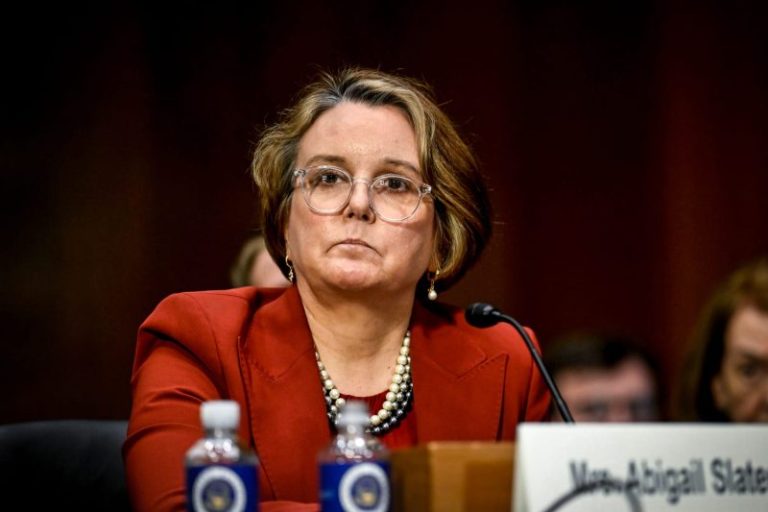
The head of the Justice Department’s antitrust unit said Thursday she is leaving the role, effective immediately, at a critical moment for corporate mergers in America.

Gail Slater, the assistant attorney general in charge of the Antitrust Division, wrote on X: ‘It is with great sadness and abiding hope that I leave my role as AAG for Antitrust today.’

Slater continued, ‘It was indeed the honor of a lifetime to serve in this role. Huge thanks to all who supported me this past year, most especially the men and women of’ the Department.

The White House referred questions to the Justice Department.

Attorney General Pam Bondi said in a statement, “On behalf of the Department of Justice, we thank Gail Slater for her service to the Antitrust Division which works to protect consumers, promote affordability, and expand economic opportunity.”

Slater is leaving just as media giants Netflix and Paramount Skydance battle for control of Warner Bros. Discovery.

President Donald Trump had said he was going to get involved in reviewing whichever Warner Bros. deal proceeds, an uncommon occurrence in antitrust matters.

But in an interview with NBC News, Trump slightly changed his tune. ‘I’ve been called by both sides, it’s the two sides, but I’ve decided I shouldn’t be involved,’ he said.

‘The Justice Department will handle it.’

Trump has met with executives from both of Warner Bros.’ bidders.

The Justice Department will also head to court in weeks in a bid to challenge concert venue manager Live Nation’s ownership of Ticketmaster.

Shares of Live Nation jumped as much as 5.8% after Slater announced her departure. By 1 p.m. ET, the rally had abated to around 2.5%.

When the Senate confirmed Slater, 78 senators from both sides of the aisle voted in her favor. Only 19 opposed her confirmation.

This week, her deputy in the Antitrust Division also departed.

Mark Hamer, deputy assistant attorney general for the Antitrust Division, wrote on LinkedIn, ‘Decided the time is right for me to return to private practice.’ He praised Slater as a ‘leader of exceptional wisdom, strength and integrity.’

This post appeared first on NBC NEWS

TSX-V: WLR

Frankfurt: 6YL

 Walker Lane Resources Ltd. (TSXV: WLR,OTC:CMCXF) (Frankfurt: 6YL) (the ‘Company’) announces that the Company continues to work diligently toward the completion and filing of the Company’s annual audited financial statements and management’s discussion and analysis for the fiscal year ended September 30, 2025 (the ‘Required Filings’). The Company is actively working on various strategies that they expect will resolve the preparation of the Required Filings as quickly as possible.

The Required Filings are due to be filed by March 30, 2025. In connection with the anticipated delays in making the Required Filings, the Company made an application for a Management Cease Trade Order (‘MCTO‘) under NP 12-203 to the BC Securities Commission, as principal regulator for the Company, and the MCTO was issued on January 29, 2026. The MCTO restricts all trading by the Company’s CEO and CFO in securities of the Company, whether direct or indirect. The MCTO does not affect the ability of persons who are not directors, officers or insiders of the Company to trade their securities. The MCTO will remain in effect until the Required Filings are filed or until it is revoked or varied.

The Company expects to proceed with the filing of its interim first-quarter financial statements shortly after the Required Filings have been completed and submitted.

The Company confirms that it intends to satisfy the provisions of the alternative information guidelines described in NP 12-203 by issuing bi-weekly default status reports in the form of a news release until it meets the Required Filings requirement. The Company has not taken any steps towards any insolvency proceeding and the Company has no material information relating to its affairs that has not been generally disclosed.

About Walker Lane Resources Ltd.

Walker Lane Resources Ltd. is a growth-stage exploration company focused on the exploration of high-grade gold, silver and polymetallic deposits in the Walker Lane Gold Trend District in Nevada and the Rancheria Silver District in Yukon/B.C. and other property assets in Yukon. The Company intends to initiate an aggressive exploration program to advance its projects through drilling programs with the aim of achieving resource definition in the near future.

For more information, please consult the Company’s filings, available at www.sedarplus.ca.

ON BEHALF OF THE BOARD OF DIRECTORS

Kevin Brewer
President, CEO and Director
Walker Lane Resources Ltd.

Forward Looking Statements

This news release contains certain statements that constitute ‘forward looking information under Canadian securities laws (‘forward-looking statements’). The use of words such as ‘anticipates’, ‘expected’, ‘projected’, ‘pursuing’, ‘plans’ and similar expressions identify forward-looking statements. Forward-looking statements in this news release include statements regarding the application for the MCTO and the completion of the Required Filings and the timing thereof. Since forward-looking statements address future events and conditions, by their very nature they involve inherent risks and uncertainties. Many factors could cause actual future events to differ materially from the forward-looking statements in this press release. The forward-looking statements included in this news release are expressly qualified by this cautionary statement. The forward-looking statements and information contained in this news release are made as of the date hereof and the Company undertakes no obligation to update publicly or revise any forward-looking statements or information, whether as a result of new information, future events or otherwise, unless so required by applicable laws. The reader is cautioned not to place undue reliance on forward-looking statements.

SOURCE Walker Lane Resources Ltd

View original content to download multimedia: http://www.newswire.ca/en/releases/archive/February2026/13/c0056.html

News Provided by Canada Newswire via QuoteMedia

This post appeared first on investingnews.com