Basin Energy (BSN:AU) has announced Queensland Uranium and Rare Earth Acquisition Completed
Download the PDF here.
This post appeared first on investingnews.com

Basin Energy (BSN:AU) has announced Queensland Uranium and Rare Earth Acquisition Completed
Download the PDF here.

Biotech is a dynamic industry that is driving scientific advances and innovation in healthcare. In Canada, the biotech sector is home to companies pursuing cutting-edge therapies and medical technologies.
Read on to learn what’s been driving these Canadian biotech firms.
Year-on-year gain: 141.23 percent
Market cap: C$410.85 million
Share price: C$8.25
Eupraxia Pharmaceuticals is developing clinical candidates that employ its DiffuSphere technology, which delivers treatments to the targeted tissues.
The company’s candidates are currently EP-104GI for eosinophilic esophagitis and EP-104IAR for knee osteoarthritis, and it is exploring the use of its technology for other active compounds as well.
Eupraxia added EP-104GI to its pipeline through its acquisition of EpiPharma Therapeutics in late 2023. The company has continued to advance the treatment through clinical trials in 2025 and released multiple rounds of positive data from its Phase 1b/2a trial cohorts.
In July, Eupraxia dosed its first patient after advancing its investigation to Phase 2b trials based on safety and efficacy data from the earlier Phase 2a patient cohorts. Top-line results from the Phase 2b study are anticipated in the second half of 2026.
In September, the company shared data from the highest-dose cohort of the still ongoing Phase 1b/2a trials, reporting that the group saw the largest improvements so far.
Year-on-year gain: 103.17 percent
Market cap: C$683.67 million
Share price: C$92.95
Bright Minds Biosciences is developing novel serotonin agonists targeting neurocircuit abnormalities linked to neuropsychiatric disorders and epilepsy, designing next-generation treatments that aim to retain the therapeutic benefits of psychedelics while minimizing side effects.
Its lead candidate, BMB-101, a selective 5-HT2C receptor agonist, has shown encouraging preclinical efficacy by stopping seizures in an epilepsy mouse model, evaluated jointly with Firefly Neuroscience (NASDAQ:AIFF).
The company’s stock surged nearly 1,500 percent in October 2024 following H. Lundbeck’s acquisition announcement of a competitor focused on similar targets. Strengthening its epilepsy expertise, Bright Minds expanded its scientific advisory board in early 2025 by adding five leaders in the field.
Ongoing clinical progress and strategic growth initiatives position Bright Minds as a promising contender in the neuropsychiatric treatment landscape.
Year-on-year gain: 31.25 percent
Market cap: C$18.40 million
Share price: C$0.11
Hemostemix is a clinical-stage biotech company focused on developing autologous stem cell therapies, meaning the treatments use a patient’s own cells to theoretically enhance safety and efficacy.
Its main product, ACP-01, is an autologous cell therapy designed to promote tissue repair and regeneration in areas affected by diseases, including a range of heart diseases.
The company announced its first advanced sales orders for ACP-01 in Q1 2025 and has been working to expand internationally and attract new investment.
Hemostemix secured the regulatory green light for commercial sales in Florida after the state passed Senate Bill 1768. The bill creates a framework in which healthcare providers can administer stem cell therapies that had not yet been approved by the US Food and Drug Administration (FDA) but meet the bill’s guidelines.
The company now offers commercial ACP-01 treatments for ischemic pain in the state under the name VesCell, with sales forecasted to reach C$22.5 million in 2026. Operational plans target cash flow positivity by Q4 2026, supported by a growing physician network and commercial pipeline.
Additionally, Hemostemix is currently collaborating with Firefly Neuroscience on a Phase 1 clinical trial of ACP-01 for vascular dementia.
Year-on-year gain: 79.92 percent
Market cap: C$300.97 million
Share price: C$4.39
NervGen is a clinical-stage Canadian biotechnology company that focuses on developing innovative treatments to enable the nervous system to repair itself following damage from injury or disease.
The company’s core technology targets a mechanism that hinders nervous system repair. When the nervous system is damaged, chondroitin sulfate proteoglycans (CSPG) form a “scar.” Initially, CSPGs help contain damage, but their long-term interaction with the PTPσ receptor inhibits repair.
NervGen’s lead drug candidate, NVG-291, is designed to relieve these inhibitory effects to promote nervous system repair. It received fast-track designation from the US FDA.
NervGen is advancing NVG-291 in a Phase 1b/2a clinical trial for spinal cord injury (SCI) and reported positive data from the chronic cohort in June.
NVG-300, a newer preclinical candidate, is being evaluated for ischemic stroke and SCI.
Securities Disclosure: I, Meagen Seatter, hold no direct investment interest in any company mentioned in this article.

The American cattle ranching industry is blasting President Donald Trump’s proposal to purchase beef from Argentina in an effort to lower supermarket beef prices.
“This plan only creates chaos at a critical time of the year for American cattle producers, while doing nothing to lower grocery store prices,” Colin Woodall, CEO of the National Cattlemen’s Beef Association, said in a statement Monday.
Wyoming-based cattle operation Meriwether Farms addressed Trump directly in a social media post Monday.
“We love you and support you — but your suggestion to buy beef from Argentina to stabilize beef prices would be an absolute betrayal to the American cattle rancher,” the farm wrote on X.
By midday Tuesday, the post had already received 4 million views. A representative for Meriwether Farms did not immediately respond to a request for comment.
Trump floated purchasing beef from the South American nation Sunday aboard Air Force One to push down U.S. beef prices by increasing the overall supply.
‘We would buy some beef from Argentina,’ he told reporters, ‘If we do that, that will bring our beef prices down.’
Beef prices have hit record highs this year, according to data from the Bureau of Labor Statistics, fueled in part by depleted herd counts and steady demand from U.S. consumers.

A group that includes activist investor Jana Partners and NFL player Travis Kelce says it has accumulated one of the largest ownership stakes in Six Flags Entertainment and intends to press the company’s leadership on ways to improve the struggling amusement park operator’s business.
Jana said Tuesday that the investor group now owns an economic interest of approximately 9% in Six Flags. The group plans to ‘engage’ with Six Flags’ management and board of directors to discuss ways to enhance shareholder value and improve visitors’ experience.
Shares in the Charlotte, North Carolina-based Six Flags surged 17.7% on the news. The shares added another 5.1% gain in after-hours trading. Even with Tuesday’s rally, the company’s shares are down about 47% so far this year.
Six Flags reported a loss of $319.4 million for the first half of the year. The company said attendance fell 9% in the three months that ended June 29, due partly to bad weather and a ‘challenged consumer’ in most of the markets it operates in.
The investor group also includes consumer executive Glenn Murphy and technology executive Dave Habiger.
Kelce, tight end for the Kansas City Chiefs, said in a statement that he grew up going to Six Flags amusement parks.
‘The chance to help make Six Flags special for the next generation is one I couldn’t pass up,’ he said.
There’s a big play happening up in PNG with a potentially huge prize and the $9m ASX listed Augustus Minerals is in the thick of it. After years of dispute, court cases and controversy, the gold-rich Mt Kare project, that sits about 600kms north-west of Port Moresby, is about to be awarded to someone by the Papua New Guinea Government’s Mineral Resources Authority, or “MRA”.
The project has a long and arduous history that reads like a bit of a soap opera.
Originally discovered by CRA, now Rio Tinto, a million ounces of alluvial gold was rumoured to have been pulled out of it just via illegal mining in the late eighties and early nineties.
For the next two decades it was explored with great success by multiple parties, however historic landowner issues forced its owner into administration in 2008 when the project was subsequently awarded to PNG local company Summit.
Fast forward to 2011 and Summit was taken out by ASX listed company Indochine.
By 2015 some $125m had been spent on the ground and at that time, Indochine set tongues wagging at the Diggers and Dealers conference in Kalgoorlie when it revealed the stellar resource at the project. That resource was 42.5m tonnes going 1.54 g/t gold and 13.5 g/t silver for a whopping 2.11m ounces of gold and a further 18.4m ounces of silver. Put a little differently, Indochine said at the time it was sitting on 2.45m gold equivalent ounces at Mt Kare and there is no evidence that any of that has been mined to this day.
By early 2015, Indochine was in some financial troubles that were exacerbated when the PNG Government refused to renew its leases for Mt Kare towards the end of that year. Indochine sought a court ruling to overturn that decision in 2018, lost that battle and saddled up again for an appeal which was thrown out again in 2021.
That final court resolution attracted applications from a flood of hopefuls, all seeking to land the grand prize of the Mt Kare leases. Since then, the PNG MRA has been working its way through them, looking for a party with both money and mining expertise to hand it to.
It is dealing with each application in the order in which it was lodged and has already summarily dismissed the first in line. It is now onto hopeful No 2, a private company by the name of Tribune Mt Kare Gold Ltd.
‘If we’re successful in securing this ground, it would position Augustus at the doorstep of world-class geology…’
Augustus Minerals CEO James Warren
If Tribune can’t meet the high money and expertise bar being set by the MRA, ASX listed Augustus Minerals, run by Perth mining man Brian Rodan and James Warren – who has a PHD in Geology no less – is next in line for the 2.45m ounce gold equivalent prize – and that’s where things start to get interesting.
Rodan might as well have a mining tattoo stamped on his forehead. He was one of a handful of people who originally set up massive mining contractor Eltin Mining many years ago. Eltin, which was domiciled in Kalgoorlie, ruled the Australian mining scene for decades around the late 1990’s early 2000’s. Rodan then went on to build large mining contractor ACM which he subsequently sold for tens of millions of dollars.
Since that time he has founded, invested in and still continues to control multiple ASX-listed exploration companies. He has been the driving force behind capital raises for all of them totalling in the many millions of dollars over time.
Curiously, Rodan – who has been in the mining game for half a century – has some form at Mt Kare. He was the managing director of mining contractor ACM PNG when it was awarded a contract back in 2012 to do the stage 1 underground drilling and mine development at the project. For various reasons that contract never went ahead and to this day the project remains unmined, however at the time Rodan provided his expertise to create the mine design and he worked out what equipment was necessary to mine it and even mobilised that equipment to site. So unlike some of the other hopefuls shaking their tail feathers at PNG’s MRA, Rodan has been down and dirty with this project before.
By any measure Mt Kare sits in the land of the giants. It is about 15 kilometres southwest of Barrick’s world-class Porgera mine, which boasts a massive endowment of over 32 million ounces of gold. Further north again is the revered Ok Tedi with its 16m ounces of gold and 11 billion pounds of copper. To the south-east of Mt Kare is Newmont/Harmony’s crazy Wafi Golpu site, host to 22 billion pounds of copper and 23m ounces of gold.
Geologically Mt Kare is an Alkalic Epithermal deposit. Alkalic type deposits are a subset of low-sulphidation epithermal deposits and form some of the mega mineral deposits around the world. Their drill results are like eye-candy to a geologist and Mt Kare is no exception. In the past, Mt Kare has thrown up coffee-spitting drill hits like 111m at 9.8 grams per tonne gold from just 4m and 17.7m at 100 g/t gold from 59m – or maybe try 20m at 443 grams per tonne gold for size! Those sort of numbers would have the West Perth mining glitterati leaping out of bed every day.
Augustus Minerals CEO James Warren said recently; “If we’re successful in securing this ground, it would position Augustus at the doorstep of world-class geology and give shareholders exposure to a project with genuine scale potential.”
For now however, Augustus’ official language on Mt Kare remains measured, as it should. “Quietly confident” is about as strong as it gets.
And while the PNG story provides the blue-sky narrative, Augustus is far from idle on home soil. The company is already advancing on multiple fronts across its West Australian portfolio, most notably the Music Well gold project which sits about 35 kilometres north of Leonora where early fieldwork has delivered results strong enough to lift eyebrows across the gold belt.
The company has completed more than a thousand surface-geochemistry samples and unearthed visible gold in quartz veins grading as high as two ounces to the tonne from the St Patricks prospect.
The maiden drill program will test undercover extensions at the Clifton East, Dodd’s, St Patricks and Black Cat prospects, all of which Augustus has ranked as high-priority greenfield targets.
Providing another string to the bow, the company also retains the Ti-Tree Project in the Gascoyne region of WA – a 1,700-square-kilometre package prospective for copper, gold, lithium, uranium and rare earths. While not the current focus, the Gascoyne ground adds a critical-minerals dimension that could gain traction as the company’s gold projects mature.
For now though, the big blue sky for Augustus comes in the form of Mt Kare. The PNG Government is looking for someone that has mining expertise and the ability to raise money to run it and whilst the credentials of the first hopeful in line, little known private company Tribune, are uncertain, Augustus has plenty of both.
And who knows, maybe no 1 and no 2 will join forces. Augustus could bring its public listing, money raising ability and mining expertise to the table and Tribune could bring its No 1 ticket holder status. And with 2.45m ounces of gold equivalent already discovered, it looks like there’s going to be plenty to go around.
Click here for the full Press Release

International Graphite (IG6:AU) has announced Collie land acquisition & approvals move ahead
Download the PDF here.
RemSense Technologies (REM:AU) has announced Chevron Extends Partnership with REM in Major Contract Award
Download the PDF here.
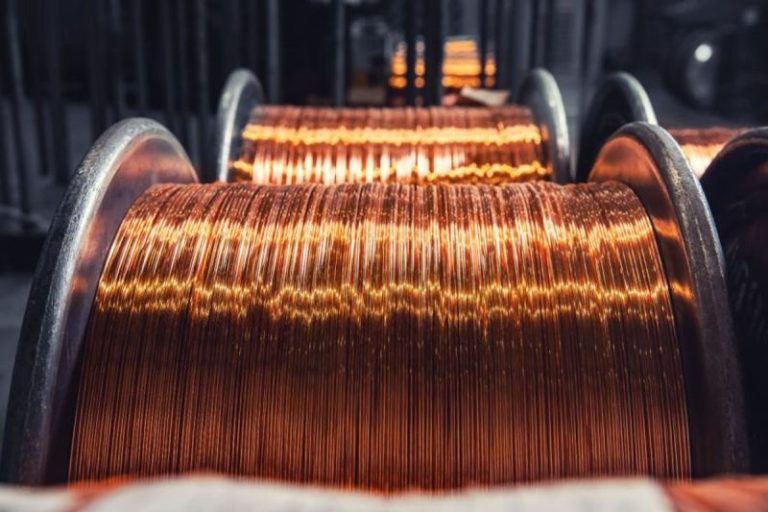
Junior copper stocks are seeing significant support from the copper supply-demand story in 2025 as companies work to make the next big copper discovery.
Copper prices were volatile in the third quarter, driven by concerns over tariffs and a mine closure.
To start the quarter, the price of copper surged to record highs as the Trump administration announced copper tariffs, offering few details beyond a 50 percent tariff on imports. However, copper prices later crashed on news that refined products would be exempt from the levies until 2027 and 2028.
In September, supply concerns gained after a serious incident led to the closure of Freeport-McMoRan’s (NYSE:FCX) Grasberg copper-gold mine in Indonesia. At the Grasberg block cave, 800,000 metric tons of wet material rushed through the mine, leading to the deaths of seven workers.
The block cave is shut down indefinitely and may not return to full operation levels until 2027. The mine is one of the largest in the world, and the loss of production puts significant strains on an already tight copper market.
How has the shifting copper market affected small-cap copper-focused companies on the TSX Venture Exchange? Read on to learn about the five best-performing junior copper stocks since the start of 2025.
Data for this article was gathered on July 17, 2025, using TradingView’s stock screener, and copper companies with market caps of over C$10 million at that time were considered.
Year-to-date gain: 1,580 percent
Market cap: C$186.31 million
Share price: C$0.84
King Copper Discovery, formerly Turmalina Metals, is a copper, silver and gold explorer that is developing a portfolio of projects in South America.
Its primary focus is the Colquemayo project in Moquegua, Peru. In July 2024, King Copper entered into an option agreement with Compania de Minas Buenaventura (NYSE:BVN) to wholly acquire the property.
The company has been relogging the historic drill core from the site. The 6,600 hectare site has seen more than 20,000 meters of historic core drilling and hosts multiple porphyry targets that have been identified but had gone untested. Highlighted drill samples show results of 2.4 percent copper and 10 grams per metric ton (g/t) silver over 237.3 meters, including 14.8 percent copper and 47 g/t silver over 31.3 meters.
In a broad corporate update on February 12, the company said it was intensifying its focus on the project and rebranded from Turmalina to reflect that. Additionally, it hired Insideo, a Lima-based environmental consulting firm, to help advance baseline studies and the drill permit process.
The company closed a C$15 million private placement with a strategic investor on September 15, which it plans to use for a 15,000 meter diamond drilling program at Colquemayo. The investor now holds a 9.99 percent interest in King Copper.
Its most recent update came on October 4, when King released an update on its ongoing work to relog and reinterpret the historic drill core. At that time, the company had completed 61 drill cores across the Amata-Cairani and Coripuquio zones, with work on 16 cores at the Yanarico zone still ongoing.
The company said it had identified multiple new high-priority targets for its fully funded diamond drill program and was sending a field crew to validate the discoveries.
Shares of King Copper reached a year-to-date high of C$0.90 on October 16.
Year-to-date gain: 700 percent
Market cap: C$12.91 million
Share price: C$0.36
Camino Minerals is a copper explorer and developer with a portfolio of projects in South America.
Among its primary focuses since the start of the year is the construction-ready Puquois copper project in Chile, a 50/50 joint venture with Nittetsu Mining (TSE:1515). The partners jointly acquired Cuprum Resources, the project’s owner, via a definitive agreement that was completed on April 17, and are now focused on project financing.
Prior to the closing of the acquisition, the partners completed a prefeasibility study for the project in Chile on March 17.
The study results demonstrate a post-tax net present value of US$118 million, with an internal rate of return of 23.4 percent and a payback period of 3.1 years at a fixed copper price of US$4.28. It also outlines all-in sustaining costs of US$2 per pound for the 14.2 year mine life.
The included mineral resource estimate shows a measured and indicated resource of 149,000 metric tons of copper from 32.16 million metric tons of ore grading 0.46 percent copper.
Camino also owns the Los Chapitos project, located near the coastal town of Chala, Peru, which covers approximately 22,000 hectares and hosts near-surface mineralization. Nittetsu Mining has an earn-in agreement for the project through which it can earn a 35 percent interest in the project for a total investment of C$10 million over three years.
Camino announced on January 22 that it had initiated a discovery exploration program at Los Chapitos, with work funded by Nittetsu. The company said the program would consist of 11 holes and 1,200 meters of drilling along the La Estancia fault, focusing on newly identified copper breccias and mantos to determine their extension at depth.
Camino released the first results from the program on May 6, reporting continuity of mineralization at depth at the Pampero prospect, with a 0.5 meter interval found 157.6 meters downhole grading an average of 0.5 percent copper and 3.15 g/t silver. Rock chip samples at the prospect graded up to 3.8 percent copper and 4 g/t silver.
The company has continued its exploration efforts at Los Chapitos, with another fully funded exploration campaign running from June 1 to November 30.
As part of this ongoing exploration campaign, the company reported on October 15 that it had mobilized to the site for the drilling portion. The drilling will focus on discovering new deposits within newly identified and undrilled targets, and on extending known mineralization in other zones.
Additionally, Camino stated that the government of Peru chose Los Chapitos as one of 15 priority mineral projects as part of its national exploration initiative. The program aims to promote investment in exploration while building a portfolio of sustainable projects with regional and national impact.
Shares of Camino reached a year-to-date high of C$0.41 on July 21.
Year-to-date gain: 550 percent
Market cap: C$22.17 million
Share price: C$0.13
Finlay Minerals is an exploration company with a portfolio of five projects in BC, Canada. In 2025, it has largely focused on its ATTY and PIL projects, which cover 3,875 hectares and 13,374 hectares respectively in BC’s Toodoggone mining district. The region is known for copper-molybdenum-gold porphyry deposits and gold-silver epithermal deposits.
Finlay’s shares rose sharply early in the year after Amarc Resources (TSXV:AHR,OTCQB:AXREF) announced the AuRORA discovery at its JOY property, located just south of the PIL project in the same porphyry corridor as PIL and ATTY.
On January 20, shortly after the discovery, Finlay announced it would be renewing its focus on its PIL project’s PIL South target, which lies approximately 750 meters from AuRORA. One month later, Finlay outlined numerous copper targets at both the PIL and ATTY properties after reviewing geological data, and was planning its 2025 exploration program at PIL to delineate drill targets.
Shares surged in Q2 after Finlay announced on April 17 it entered into an earn-in agreement with Freeport-McMoRan (NYSE:FCX) for PIL and ATTY. Freeport can earn an 80 percent stake in the properties through a total of C$35 million in exploration expenditures and C$4.1 million in cash payments over the next six years.
On June 18, Finlay began exploration programs at both properties, fully funded by Freeport. At both properties, exploration will include property-wide airborne magnetic surveys, and induced polarization geophysical surveys. It will also include detailed geological and alteration mapping, along with rock and soil sampling, on up to eight targets at PIL and three targets at ATTY.
Then on July 17, Finlay announced it had increased the exploration program budget for PIL to C$2.6 million from C$750,000 and the budget for ATTY to C$1 million from C$500,000. The company stated that the additional funding will be utilized to identify and prioritize as many targets as possible for drilling in 2026.
In parallel with the Freeport-funded work at PIL and ATTY, the company also advanced exploration at its independently held SAY and JJB properties, located in BC’s Stikine Terrane.
On September 22, Finlay announced that it had completed its field work at the properties, including 1,900 kilometers of airborne magnetic surveys between them and follow-up ground work on newly identified targets.
At the SAY project, Finlay identified the IFT target, a 2.5 kilometer by 2.5 kilometer magnetic anomaly with similar geophysical signatures to other copper porphyry deposits, and a kilometer-scale target named Ozzy. The company performed follow-up work at both targets, and is planning further follow-up work.
Fieldwork at JJB conducted during the summer focused on the PAT target and aimed to evaluate similarities between mineralization at JJB and two of SAY’s previously identified targets. The company staked the JJB property, which also hosts the Squingula and Quin targets, in February.
Shares in Finlay reached a year-to-date high of C$0.16 on September 22.
Year-to-date gain: 536.36 percent
Market cap: C$11.72 million
Share price: C$0.35
Domestic Metals, formerly Norden Crown Metals, is a copper exploration company focused on advancing the Smart Creek project in Montana, US.
The company acquired the option to earn a 60 percent share in the project, which is owned by Rio Tinto (ASX:RIO,NYSE:RIO,LSE:RIO), when it purchased Domestic Copper in August 2024.
The property comprises 570 unpatented mining claims covering an area of 4,072 hectares and 45 patented claims spanning 312 hectares. It hosts the Smart Creek, Radio Tower and Sunrise targets, the latter located at the past-producing Sunrise mine. Drilling at the site carried out by Rio Tinto in 2022 produced a drill hole grading 0.75 percent copper and 18.74 g/t silver over 109.73 meters.
On March 31, the company announced it changed its name from Norden Crown Metals to Domestic Metals to reflect its shift in corporate strategy to focus on its operations in Montana.
In an update on April 17, the company reported results from geological reconnaissance work at Smart Creek, which included the definition of the high-priority Smart Creek, Radio Tower and Sunrise targets, along with new alteration vectors.
As of a September 11 project update, fieldwork, including mapping and geochemical sampling, was being conducted to advance the three targets for diamond drill testing during the fourth quarter of 2025.
The company has also been working on fundraising efforts throughout 2025. On August 22, it closed the final tranche of a non-brokered private placement, generating total aggregate proceeds of C$1.22 million. Then, on October 9, the company closed the first tranche of a LIFE offering for proceeds of C$1.31 million.
Shares in Domestic Metals reached a year-to-date high of C$0.38 on September 26.
Year-to-date gain: 485.37 percent
Market cap: C$265.89 million
Share price: C$1.20
Amarc Resources is a copper explorer primarily focused on advancing its JOY district in Northern BC. The 495 square kilometer property lies within the Toodoggone region and hosts the AuRORA prospect.
Exploration at the JOY district is funded as part of a May 2021 earn-in agreement with Freeport-McMoRan (NYSE:FCX), which allows Freeport to earn up to a 70 percent stake in the project.
Additionally, Amarc agreed to acquire the Brenda property, which lies directly to the east of the AuRORA discovery, from Canasil Resources on February 11. Under the terms of the deal, Amarc has the option to acquire a 100 percent interest in Brenda over five years. Canasil will retain a 2 percent net smelter return.
Shares of Amarc surged early in the year after it announced the discovery of AuRORA on January 17. In the release, it outlined the high-grade potential of the deposit, highlighting an assay of 0.63 percent copper over 162 meters, including an 81 meter intersection grading 0.92 percent copper, from near surface depths.
Amarc provided more drill assays from its 2024 program on February 28. One assay graded 0.63 percent copper over 132 meters, including 0.81 percent over a 90 meter segment.
On July 16, Amarc announced it had commenced drilling at targets including the AuRORA and PINE deposits and the Twins and Canyon discoveries. The announcement also reported the expansion of the JOY district through Freeport’s options on Finlay’s PIL property, discussed above.
Then, on September 4, the company reported Freeport is proceeding to Stage 2 of its earn-in for the JOY property after completing Stage 1 in May for a 60 percent interest. Under the terms of the deal, Freeport now has five years to earn an additional 10 percent in the property by spending C$75 million.
The most recent news from the project was released on September 22, when Amarc announced a partial assay from one drill hole southeast of the AuRORA discovery.
The assays that were released indicated a broad interval of 223.1 meters with an average grade of 0.27 percent copper from a depth of 217 meters, including a 65.25 meter interval grading 0.37 percent. Assays are still pending for the upper half of the hole.
The company reported that host rocks, alteration and mineralization in the hole are consistent with those encountered during its 2024 campaign at the property; however, the mineralization found in the hole ‘occurs well outside the strong magnetic high that hosts the high grade AuRORA mineralization.’
The company said it rushed the results due to the location of the drill hole, which is important for revealing large-scale exploration potential across the JOY District.
Shares of Amarc climbed significantly through September, and reached a year-to-date high of C$1.35 on September 26.
Securities Disclosure: I, Dean Belder, hold no direct investment interest in any company mentioned in this article.
Apollo Silver Corp. (‘ Apollo Silver ‘ or the ‘ Company ‘) (TSX.V:APGO, OTCQB:APGOF, Frankfurt:6ZF0) is pleased to announce the Company has closed the first tranche, representing the majority of its previously announced upsized non-brokered private placement (the ‘Upsized Offering’), raising gross proceeds of $25,134,145 through the issuance of 6,981,707 units (the ‘Units’) of the Company at a price of $3.60 per Unit. The Upsized Offering totals $26,775,648, with the final tranche of 455,973 Units for gross proceeds of $1,641,503 expected to close in the coming days.
Each Unit issued pursuant to the Upsized Offering consists of one common share (a ‘Share’) in the capital of the Company and one common Share purchase warrant (a ‘Warrant’). Each Warrant entitles the holder thereof to purchase one Share at an exercise price of $5.50 for 24 months from the closing date of the Offering. The Warrants will be subject to an acceleration provision, such that if at any time after the date that is four months and one day after the closing, the Company’s Shares trade on the TSX Venture Exchange (the ‘TSXV’) at a closing price of $7.50 or greater per Share for a period of ten (10) consecutive trading days, the Company may accelerate the expiry of the Warrants by giving notice to the holders thereof and, in such case, the Warrant will expire on the thirtieth (30th) day after the date of such notice (the ‘Acceleration Provision’)
In connection with subscriptions received in the first tranche of the Upsized Offering, the Company will pay aggregate finder’s fees totaling $826,549, payable in cash and/or Units to BMO Capital Markets, Canaccord Genuity, Red Cloud Securities Inc., Research Capital Corporation and SCP Resource Finance.
The securities issued under the Upsized Offering are subject to a four-month hold period from the date of closing. The Company intends to use the net proceeds from the Upsized Offering to continue advancing the Calico Silver Project in San Bernardino, California; support community relations initiatives at the Cinco de Mayo Silver Project in Chihuahua, Mexico; cover ongoing property maintenance costs at both projects; and for general corporate purposes. The Upsized Offering remains subject to the final approval of the TSXV.
The Offering included participation by certain insiders of the Company for an aggregate of 405,557 units totaling gross proceeds of $1,460,005.20. Such participation constitutes a ‘related party transaction’ under Multilateral Instrument 61-101 – Protection of Minority Security Holders in Special Transactions (‘MI 61-101’). The issuance of securities to insiders is exempt from the valuation requirement pursuant to section 5.5(b) of MI 61-101, as the Company’s shares are not listed on a specified market, and from the minority shareholder approval requirement pursuant to section 5.7(a) of MI 61-101, as the fair market value of the securities issued to related parties does not exceed twenty five percent of the Company’s market capitalization.
The Shares have not been, and will not be, registered under the United States Securities Act of 1933, as amended (the ‘U.S. Securities Act’), or any U.S. state securities laws, and may not be offered or sold in the United States without registration under the U.S. Securities Act and all applicable state securities laws or compliance with the requirements of an applicable exemption therefrom. This news release shall not constitute an offer to sell or the solicitation of an offer to buy securities in the United States, nor shall there be any sale of these securities in any jurisdiction in which such offer, solicitation or sale would be unlawful.
About Apollo Silver Corp.
Apollo is advancing one of the largest undeveloped primary silver projects in the US. The Calico project hosts a large, bulk minable silver deposit with significant barite and zinc credits – recognized as critical minerals essential to the US energy and medical sectors. The Company also holds an option on the Cinco de Mayo Project in Chihuahua, Mexico, which is host to a major carbonate replacement (CRD) deposit that is both high-grade and large tonnage. Led by an experienced and award-winning management team, Apollo is well positioned to advance the assets and deliver value through exploration and development.
Please visit www.apollosilver.com for further information.
ON BEHALF OF THE BOARD OF DIRECTORS
Ross McElroy
President and CEO
For further information, please contact:
Email: info@apollosilver.com
Telephone: +1 (604) 428-6128
Neither the TSX Venture Exchange nor its Regulation Services Provider (as that term is defined in the policies of the TSX Venture Exchange) accepts responsibility for the adequacy or accuracy of this release.
Cautionary Statement Regarding ‘Forward-Looking’ Information
This news release includes ‘forward-looking statements’ and ‘forward-looking information’ within the meaning of Canadian securities legislation. All statements included in this news release, other than statements of historical fact, are forward-looking statements including, without limitation, statements with respect to the expected timing for completion of the remaining balance of the Upsized Offering; and the intended use of proceeds from the Upsized Offering. Forward-looking statements include predictions, projections and forecasts and are often, but not always, identified by the use of words such as ‘anticipate’, ‘believe’, ‘plan’, ‘estimate’, ‘expect’, ‘potential’, ‘target’, ‘budget’ and ‘intend’ and statements that an event or result ‘may’, ‘will’, ‘should’, ‘could’ or ‘might’ occur or be achieved and other similar expressions and includes the negatives thereof.
Forward-looking statements are based on the reasonable assumptions, estimates, analysis, and opinions of the management of the Company made in light of its experience and its perception of trends, current conditions and expected developments, as well as other factors that management of the Company believes to be relevant and reasonable in the circumstances at the date that such statements are made. Forward-looking information is based on reasonable assumptions that have been made by the Company as at the date of such information and is subject to known and unknown risks, uncertainties and other factors that may have caused actual results, level of activity, performance or achievements of the Company to be materially different from those expressed or implied by such forward-looking information, including but not limited to: risks associated with mineral exploration and development; metal and mineral prices; availability of capital; accuracy of the Company’s projections and estimates; realization of mineral resource estimates, interest and exchange rates; competition; stock price fluctuations; availability of drilling equipment and access; actual results of current exploration activities; government regulation; political or economic developments; environmental risks; insurance risks; capital expenditures; operating or technical difficulties in connection with development activities; personnel relations; and changes in Project parameters as plans continue to be refined. Forward-looking statements are based on assumptions management believes to be reasonable, including but not limited to the price of silver, gold and barite; the demand for silver, gold and barite; the ability to carry on exploration and development activities; the timely receipt of any required approvals; the ability to obtain qualified personnel, equipment and services in a timely and cost-efficient manner; the ability to operate in a safe, efficient and effective matter; and the regulatory framework regarding environmental matters, and such other assumptions and factors as set out herein. Although the Company has attempted to identify important factors that could cause actual results to differ materially from those contained in forward-looking information, there may be other factors that cause results not to be as anticipated, estimated or intended. There can be no assurance that forward-looking statements will prove to be accurate and actual results, and future events could differ materially from those anticipated in such statements. Accordingly, readers should not place undue reliance on forward looking information contained herein, except in accordance with applicable securities laws. The forward-looking information contained herein is presented for the purpose of assisting investors in understanding the Company’s expected financial and operational performance and the Company’s plans and objectives and may not be appropriate for other purposes. The Company does not undertake to update any forward-looking information, except in accordance with applicable securities laws .
News Provided by GlobeNewswire via QuoteMedia
Volatility punctuated the global lithium market during the third quarter of 2025, as prices, supply/demand dynamics and geopolitics converged to reshape the landscape.
After slipping to a four year low at the end of June, benchmark lithium carbonate prices rallied through July to reach an 11 month high of US$12,067 per metric ton on August 21. However, the momentum proved unsustainable and prices slipped shortly thereafter, ending the three month session at US$11,185.89.
According to Fastmarkets, the surge was driven by rumors that Australian producers Mineral Resources (ASX:MIN,OTC Pink:MALRF) and Liontown Resources (ASX:LTR,OTC Pink:LINRF) might scale back supply.
Both companies denied the reports, and analysts have suggested that even if such reductions were implemented, they would do little to rebalance the current surplus in the lithium market.
“The nascency of the lithium market means that it is prone to be led by sentiment,” Fastmarket’s Claudia Cook wrote in a July update. “However, with healthy inventory levels and continued ramp-up of production, the reported supply cuts, even if they proved true, may not be enough to dip the market into a deficit.”
US policy uncertainty also weighed on sentiment. The Trump administration’s bill to roll back electric vehicle (EV) tax credits, alongside tariff concerns and a perceived retreat from the Inflation Reduction Act, rattled investors.
The repeal had the potential to spur a short-term rush in EV purchases, although liquidity in North America remains thin, and the medium-term outlook has turned bearish, Cook noted.
Elsewhere China’s fair competition policy — intended to curb market monopolies and prevent below-cost dumping — stirred speculation across the lithium supply chain. Though the directive primarily targets downstream industries, traders are watching closely to see whether it will ripple upstream and influence pricing dynamics.
The largest undercurrent for the lithium market is excessive supply. Since 2020, mined output has climbed 192 percent from 82,000 metric tons to 240,000 metric tons in 2024, as outlined by the US Geological Survey.
As supply grew, demand was unable to keep pace, leading to a mounting glut that has weighed on prices.
“While futures activity can catalyse short-term price movements, beneath the surface demand remains tepid, inventories high and buyers cautious, underscoring a disconnect between price action and market reality,” Paul Lusty, head of battery raw materials at Fastmarkets explained in a September update. “We expect continued price instability in the near term with potential for further corrections unless meaningful supply disruptions materialise.”
The supply increase was anticipated to satiate a growing appetite for EVs that has yet to fully materialize.
The EV boom has fueled strong long-term growth forecasts for lithium, but the market is now facing a sharp imbalance. Global EV sales climbed past 17 million units in 2024 and are projected to top 20 million in 2025, yet a 22 percent surge in mined supply last year has outpaced demand, pushing prices lower and creating a persistent oversupply.
This discrepancy was underscored by industry attendees at Fastmarkets’ Lithium Supply & Battery Raw Materials conference, who warned that the imbalance could persist until at least 2030.
As a result, lithium prices remain under pressure despite strong EV uptake, and a meaningful re-balancing will likely depend on new supply expansions being delayed, mine closures and steeper than anticipated demand growth — potentially in the second half of the decade.
With EV demand expected to accelerate beyond 2030 and new supply projects lagging, Q3 2025 could mark the start of a tighter era. For investors watching battery metals, the key question is whether the market has found a floor — or is merely in the calm before the next supply squeeze.
As mentioned, the market did find support through July and August, thanks in part to Chinese battery giant Contemporary Amperex Technology (CATL) (SZSE:300750,HKEX:3750) suspending operations at its Jianxiawo lepidolite mine. Located in the country’s Jiangxi province, it is one of the world’s largest lithium sources.
The shutdown followed the August 9 expiration of the mine’s operating permit, with CATL confirming it is seeking an extension but providing no timeline for restarting production. The halt was expected to last at least three months, removing about 65,000 metric tons of lithium carbonate equivalent — roughly 6 percent of global supply — from the market and reigniting bullish sentiment in an otherwise oversupplied sector.
The shuttering of the mine propelled lithium prices and mining stocks.
In mid-October China introduced new export restrictions on advanced lithium-ion batteries, key materials and production equipment — a move set to ripple through global supply chains.
Effective November 8, 2025, companies will now need export licenses to ship high-energy batteries, cathodes, synthetic graphite anodes and related machinery abroad. The new policy follows July’s limits on lithium iron phosphate (LFP) technology exports, tightening Beijing’s control over the battery sector.
China produces over 70 percent of global cathode materials and more than 95 percent of synthetic graphite, making its export decisions pivotal. S&P Global notes in an October briefing that the new controls are expected to delay production timelines and complicate sourcing for manufacturers outside China, particularly in the US, which imports roughly two-thirds of its lithium-ion batteries from Chinese suppliers.
“Export control does not mean an outright export ban, but rather a stricter approval process,” said Fastmarkets’ Walter Zhang. “We believe that the primary intent is to counter measures such as the US OBBB (One Big Beautiful Bill) Act, while preventing potential technology transfer demands from European or American governments and avoiding the military or dual-use applications of advanced battery technologies.”
Additionally, the move adds a new front to the US-China trade standoff, with Washington expected to deepen partnerships with Korean and Japanese producers like LG Energy Solution and Panasonic to reduce dependency.
While China’s CATL will likely pivot toward Europe and emerging markets, global battery costs and supply volatility are expected to rise through 2026.
Outside of China, the US invested heavily in the lithium-mining segment in Q3.
On October 1, Washington released the first US$435 million tranche of a landmark US$2.23 billion loan to Lithium Americas (TSX:LAC,NYSE:LAC), marking one of the Trump administration’s most significant steps yet to strengthen domestic control over critical minerals.
The funds, directed through the Department of Energy, will support construction of the Thacker Pass lithium project in Nevada, which is set to become the largest lithium source in the Western Hemisphere.
As part of the deal, the department will receive warrants representing a 5 percent equity stake in Lithium Americas and an equivalent interest in its joint venture with General Motors (NYSE:GM).
The agency also agreed to defer US$182 million in debt service over five years, underscoring Washington’s long-term commitment to building a resilient battery supply chain.
Thacker Pass is central to US efforts to reduce reliance on Chinese lithium refining and rival major producers in Australia and Chile. Once operational, Phase 1 of the project will produce 40,000 metric tons of battery-grade lithium carbonate annually — enough to power roughly 800,000 EVs — and reinforce the administration’s push to secure supply.
Looking at the rest of the year and remainder of the decade sentiment towards lithium is cautiously optimistic, according to Benchmark analysts fresh off the heels of this year’s LME Week in London.
“Market participants noted that strong spodumene appetite continues amid limited lepidolite supply from Jiangxi,” a Benchmark overview states. “Attention turned to CATL’s Jianxiawo mine, with its start‑up – whether as soon as next month or delayed to early Q1 26 – likely to influence short‑term pricing.”
Securities Disclosure: I, Georgia Williams, hold no direct investment interest in any company mentioned in this article.